Geraniol
2,6-Octadien-1-ol, 3,7-dimethyl-, (2E)-
Does geraniol repel mosquitoes?
Yes, and at the right concentration, better than most botanicals. Luker 2023 arm-in-cage tests found 10% geraniol in a lotion emulsion protected for over 60 minutes against both mosquitoes and ticks. López 2025 showed the dose-response has a steep cliff: below 4% it's nearly useless, but at 5% it reaches the same plateau as 10%. Products with 5%+ geraniol in a lotion base deserve a serious look; products at 1–3% do not.
When to choose it: Backyard and patio use when you want a disclosed botanical at meaningful concentration (5%+). Among botanicals, it has the strongest tick data in our library, but it still falls short of synthetics for all-day protection.
A rose-scented alcohol found in geranium, citronella, and rose oils. Among botanicals it is unusual for having a clear dose threshold: useful above 5% in a lotion base, close to useless below 4%.
How it works
Geraniol deters mosquitoes and ticks by contact and short-range vapor rather than killing them. It evaporates faster than a synthetic active, which holds protection to an hour or two even at effective doses.
Safety around dogs & cats
Geraniol is a monoterpene alcohol that cats, with limited glucuronidation, clear slowly, so it should not be applied to cats and cats should be kept off treated skin. Dogs handle it better, but it remains a skin and mucous-membrane irritant that is not meant for animals.
Low confidence. Ratings from ASPCA Animal Poison Control, the Pet Poison Helpline, and published veterinary toxicology. This is general information, not veterinary advice. If your pet is exposed, call your vet or the ASPCA Animal Poison Control Center at (888) 426-4435.
Mosquito protection by concentration: Geraniol
Complete protection time (dark = lower bound, light = upper bound) on the same 12 h scale used across the site. Modeled from published dose-response data in our research library.
The evidence
A 2025 arm-in-cage study put geraniol's half-effect concentration near 5%, with a steep rise across the 4-to-5% line, and a 2023 assay measured about an hour of complete protection at 10% in a lotion. CDC's 2024 tick reviews list it among the few minimum-risk actives with any measurable tick window.
- Repellency of Essential Oils and Plant-Derived Compounds Against Aedes aegypti Mosquitoes2025LabWell-supported evidence
This lab study mapped how geraniol's mosquito repellency changes with dose, following the same group's earlier finding that a handful of botanicals cleared an hour of protection at 10%. The question was practical: how much geraniol do you actually need, and does protection build gradually or switch on at a threshold?
- Efficacy of Unregulated Minimum Risk Products to Kill and Repel Ticks2024ReviewDefinitive evidence
A CDC review in Emerging Infectious Diseases asking whether the unregulated minimum-risk botanical products sold to kill and repel ticks actually work, against EPA-registered products. Its verdict: efficacy is wide-ranging, often poor, and unpredictable, and real skin-repellency data for them barely existed.
- Efficacy of unregulated minimum risk tick repellent products evaluated with Ixodes scapularis nymphs in a human skin bioassay2024LabWell-supported evidence
This study filled the exact gap the CDC review flagged: it measured, on human skin, how well eleven unregulated botanical tick repellents keep blacklegged-tick nymphs off, against DEET, across 6.5 hours.
- Repellent efficacy of 20 essential oils on Aedes aegypti mosquitoes and Ixodes scapularis ticks in contact-repellency assays2023LabWell-supported evidence
A New Mexico State University lab put 20 minimum-risk repellent ingredients through the same test at the same 10% strength, so the oils could be compared head to head instead of across studies that each used different doses and methods. The point was a like-for-like ranking of how long each one keeps Aedes aegypti mosquitoes and blacklegged ticks off skin.
- Activity of the plant-based repellent TT-4302 against the ticks Amblyomma americanum, Dermacentor variabilis, Ixodes scapularis and Rhipicephalus sanguineus2014LabLimited evidence
The tick companion to the TT-4302 mosquito study, testing the same 5% geraniol repellent against four tick species versus 15% DEET in laboratory choice tests.
- Performance of the Plant-Based Repellent TT-4302 Against Mosquitoes in the Laboratory and Field and Comparative Efficacy to 16 Mosquito Repellents Against Aedes aegypti2014Field TrialWell-supported evidence
A test of TT-4302, a 5% geraniol formulation, against mosquitoes in the lab and field, benchmarked against 16 commercial repellents and 15% DEET. The headline is that this geraniol product outlasted everything else tested, though the DEET comparator was a low 15%.
- Plant-based insect repellents: a review of their efficacy, development and testing2011ReviewWell-supported evidence
Review of plant-based repellent efficacy, development, and testing.
- Efficacy of 1% geraniol (Fulltec) as a tick repellent2009Field TrialLimited evidence
A field trial testing whether a 1% geraniol spray cuts natural tick infestation on grazing cattle, run on two farms near Rabat, Morocco. It is a livestock study, not a human skin test, but it shows geraniol has real, if fading, tick activity.
- Efficacy of the botanical repellents geraniol, linalool, and citronella against mosquitoes2009Field TrialWell-supported evidence
Field trial of geraniol, linalool, and citronella as diffusers and candles against wild mosquitoes.
- Ability of essential oil candles to repel biting insects in high and low biting pressure environments2008Field TrialWell-supported evidence
Field trial of essential oil candles against biting insects at varying distances.
- Laboratory Evaluation of Mosquito Repellents Against Aedes albopictus, Culex nigripalpus, and Ochlerotatus triseriatus2004LabLimited evidence
A lab screen putting 12 commercial repellents, four synthetic and eight botanical, on the same scale against three mosquito species, useful because it tests a 25% geraniol product and DEET side by side.
Products using it

Quantum Health
Buzz Away Extreme Spray
Citronella oil 0.98% · Clove oil 0.40%
Complete protection
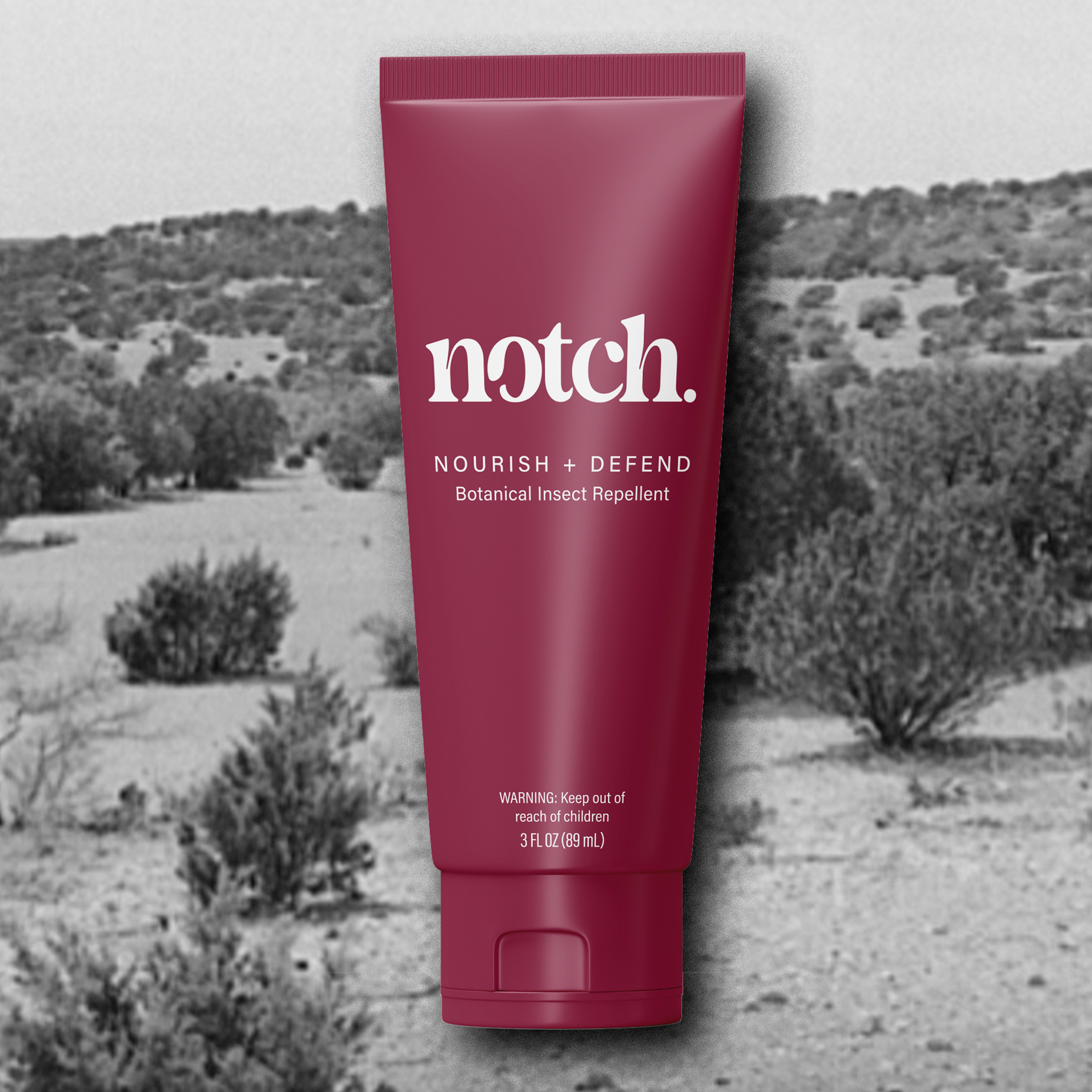
NotchOur product
Nourish + Defend Botanical Insect Repellent
Geraniol 5%
Complete protection
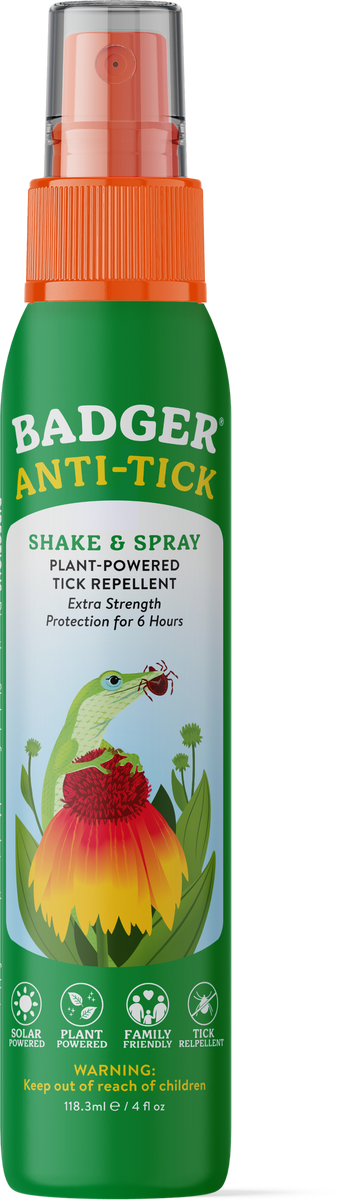
Badger
Anti-Tick Spray
Thyme oil 1.0% · Geraniol 4.5%
Complete protection
Maggie's Farm
Maggie's Farm Natural Insect Repellent
Citronella oil 0.95% · Clove oil 0.50%
Complete protection
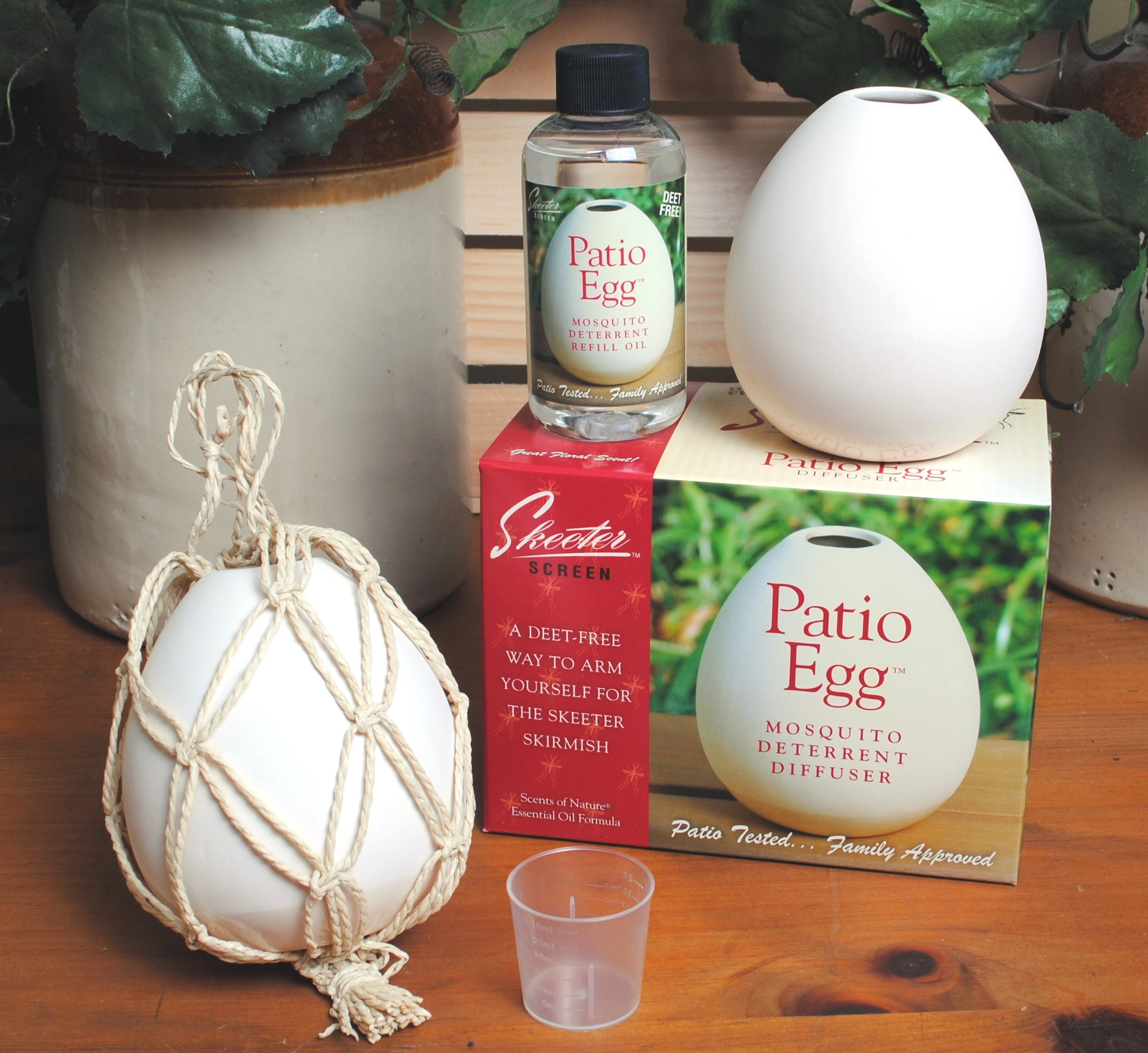
Skeeter Screen
Skeeter Screen Patio Egg
Lemongrass oil · Geraniol
Coverage & effectiveness
Not recommended
Potentially not EPA compliant
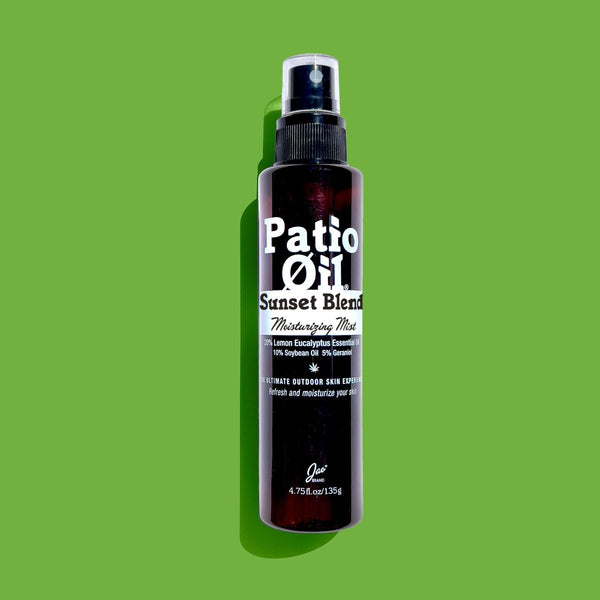
Jao
Jao Patio Oil Moisturizing Mist
Oil of Lemon Eucalyptus 20% · Geraniol 5%
Complete protection
Not recommended
No proven mosquito protection
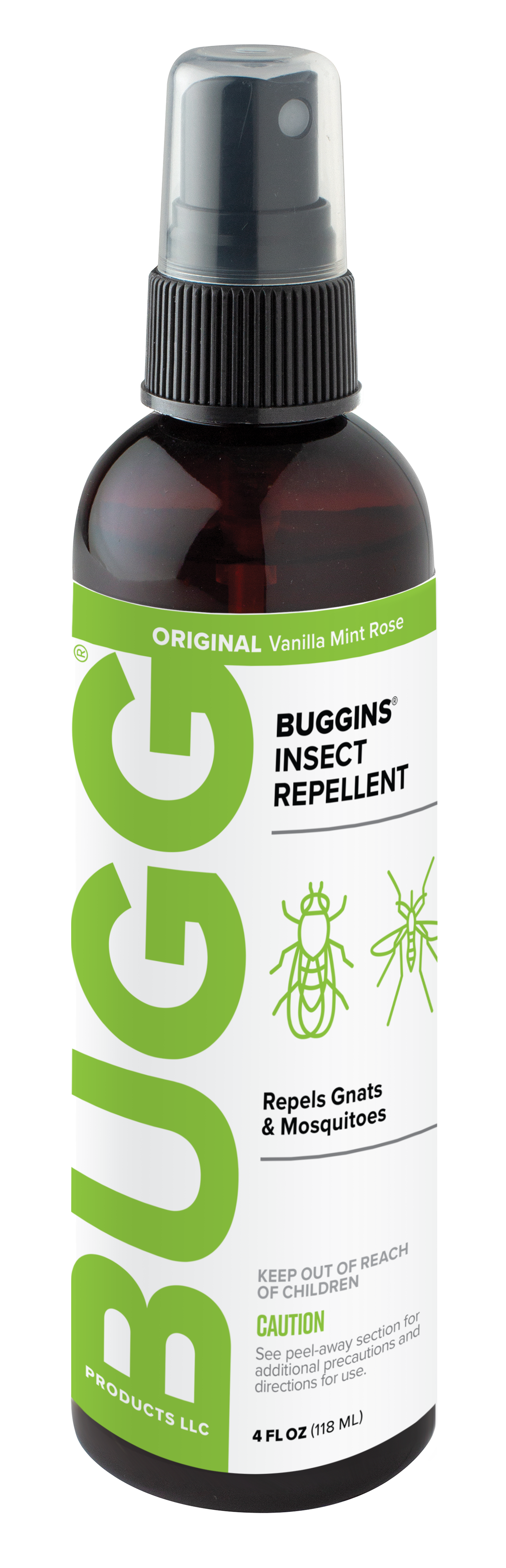
BUGGINS
BUGGINS Original Insect Repellent
Clove oil 0.05% · Lemongrass oil 0.06%
Complete protection

Not recommended
No proven mosquito protection
Natrapel
Natrapel Essential Oil Insect Repellent – Pets & People
Thyme oil 1.90% · Lemongrass oil 0.05%
Complete protection

Not recommended
Formula not fully disclosed +1 more
Quitch
Geraniol Bug Repellent Balm
Castor oil · Cedarwood oil
Complete protection
Not recommended
No proven mosquito protection
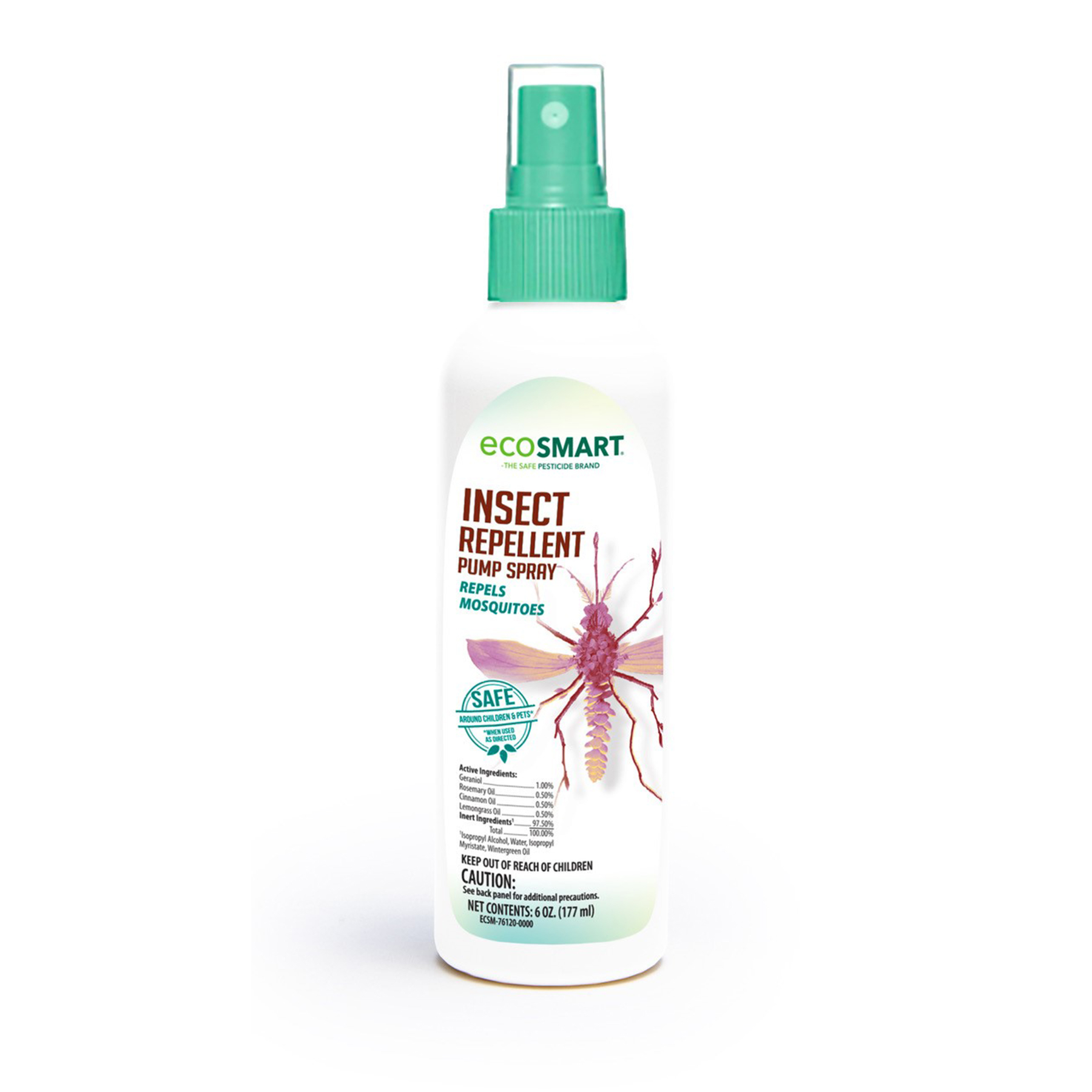
EcoSMART
EcoSMART Organic Insect Repellent
Rosemary oil 0.5% · Lemongrass oil 0.5%
Complete protection

Not recommended
Formula not fully disclosed +1 more
Buzzie
Insect Repellent Spray
Cedarwood oil · Rosemary oil
Complete protection
Not recommended
Formula not fully disclosed +1 more
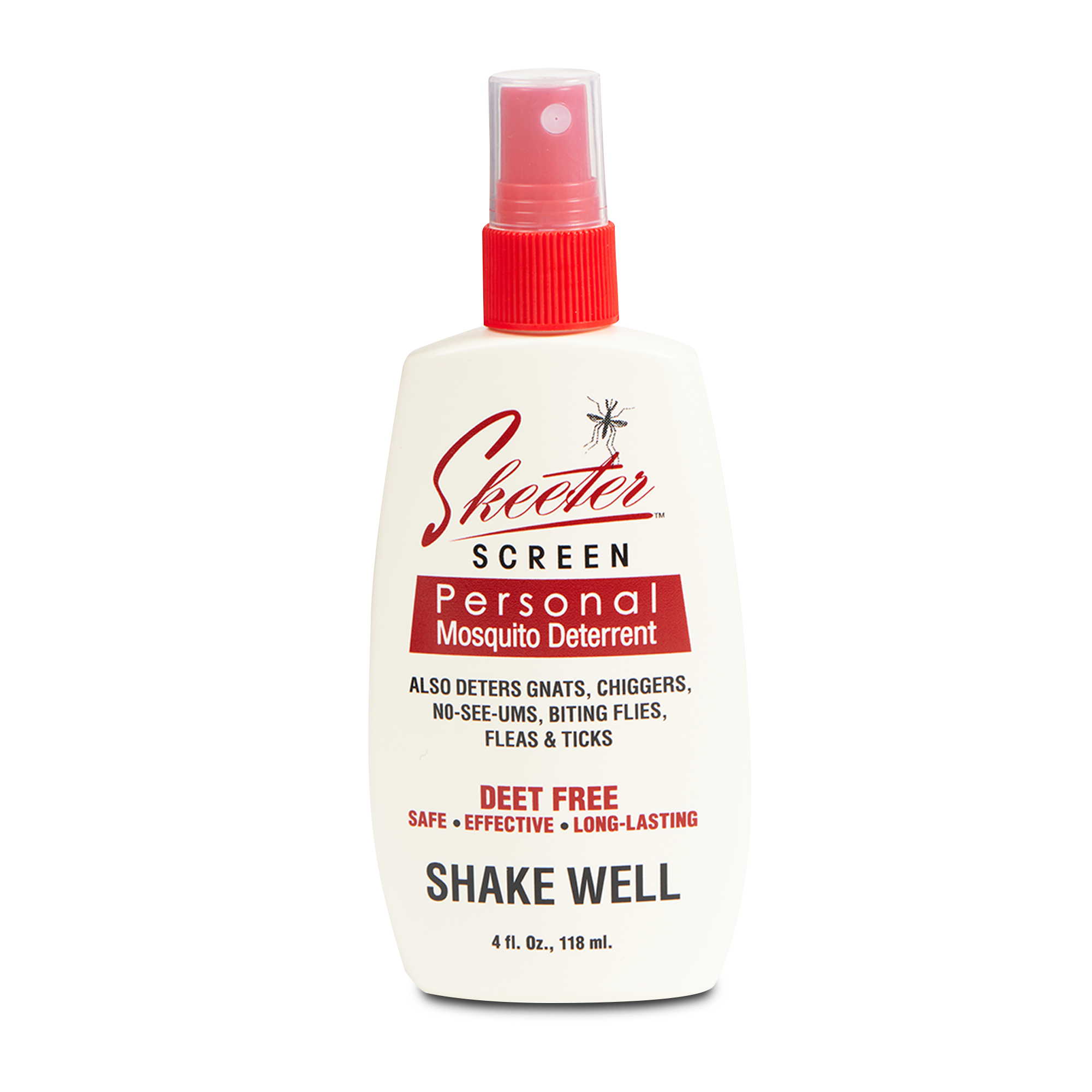
Skeeter Screen
Skeeter Screen 4 oz. Personal Spray
Cedarwood oil · Clove oil
Complete protection
Not recommended
Formula not fully disclosed +1 more
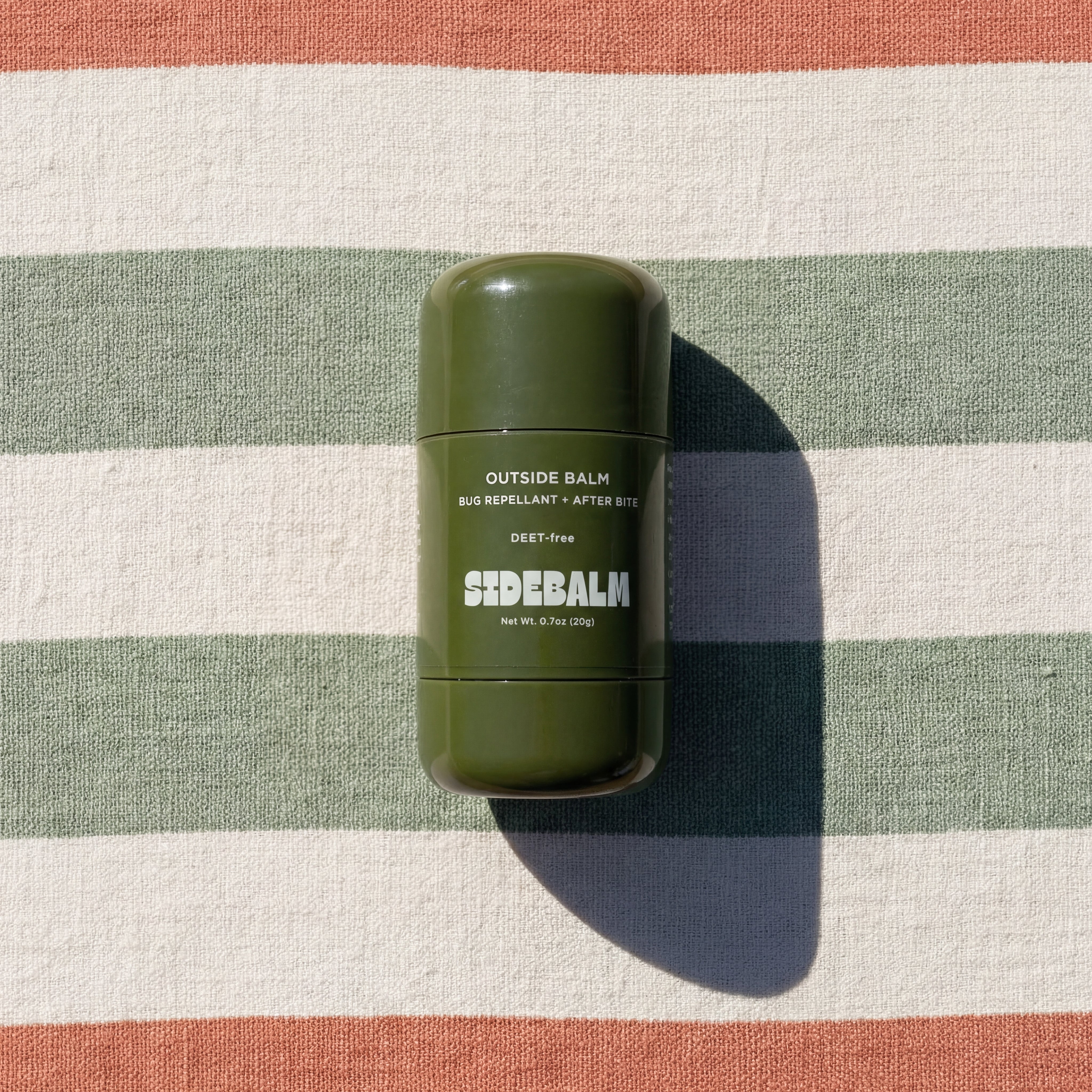
Sidebalm
Outside Balm
Cedarwood oil · Clove oil
Complete protection

Not recommended
Formula not fully disclosed +1 more
Grandpa Gus
Grandpa Gus Mosquito Repellent Spray
Lemongrass oil · Geraniol
Complete protection
Not recommended
Formula not fully disclosed +2 more
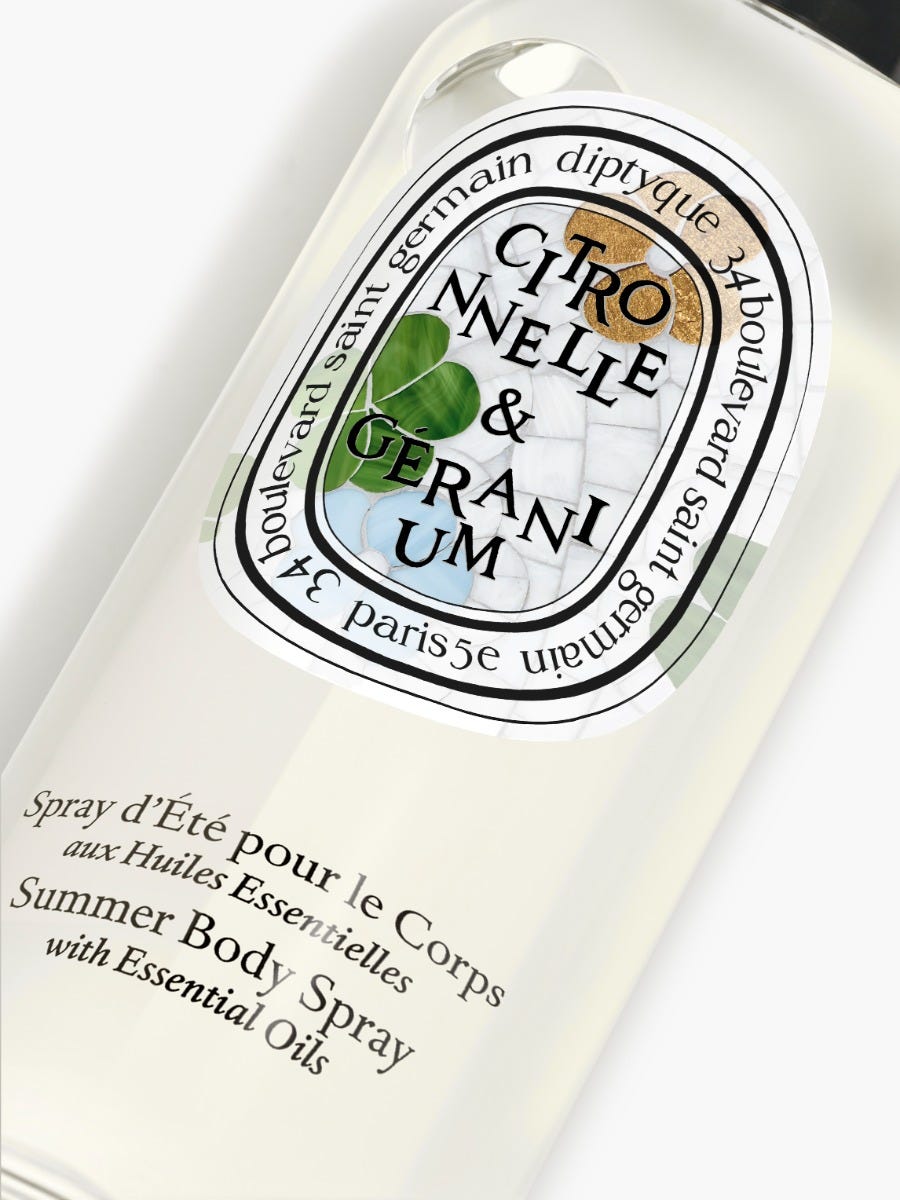
Diptyque
Diptyque Lemongrass & Geranium Summer Body Spray
Citronella oil · Geranium oil
Complete protection
Common misconceptions
Myth: “Geraniol candles prove hours of protection.”
Reality: Candles and diffusers test area repellency in enclosed spaces, a different endpoint than skin CPT. On skin, Luker 2023 measured >60 min at 10% in lotion; that's real but still an hour, not an afternoon.
Myth: “A little geraniol goes a long way.”
Reality: The opposite at low doses: López 2025 found a 16-fold CPT jump between 4% and 5%. At 1–3%, protection is measured in minutes. The concentration on the label matters enormously.
Regulatory notes
EPA minimum risk (FIFRA 25(b)) approved active ingredient; matched to SRS registry entry.
Safety notes
A 25(b) minimum-risk ingredient long used in fragrance and food. It is also a declared fragrance allergen and can sensitize skin, so patch-test concentrated products.
Frequently asked questions
How often should I reapply a geraniol repellent?
At 5%+ in a lotion base, roughly every hour for complete protection, matching what Luker measured. Below 4%, reapply every 15–30 minutes or switch products.
Does geraniol repel ticks?
Yes. Luker 2023 measured >60 min tick CPT at 10% in lotion, the longest botanical tick data in our library. Still well short of picaridin or IR3535 for trail use.
Is geraniol safe?
It's on the EPA minimum-risk (25(b)) list with a long history in cosmetics. It can be a skin sensitizer for some people, so patch-test concentrated products.