Bti (Bacillus thuringiensis israelensis)
Bacillus thuringiensis subspecies israelensis
Bti is a naturally occurring soil bacterium, Bacillus thuringiensis subspecies israelensis, used as a biological larvicide in mosquito dunks, bits, briquets, and pond treatments. It is not a personal repellent and is not applied to skin. It is placed into standing water, where mosquito larvae feed on it and die before they can grow into biting adults, which makes it a source-control tool that lowers the next generation of mosquitoes. It is EPA-registered as a biopesticide. Its defining feature is target specificity: it is lethal to the larvae of mosquitoes, black flies, and fungus gnats and is documented as essentially non-toxic to humans, mammals, fish, birds, bees, and other non-target wildlife, which is why the EPA, CDC, and WHO recommend it for standing water that cannot be drained, including water-storage containers.
How it works
Bti kills by ingestion, not by contact or nerve poisoning. A larva feeding in the water swallows Bti spores and the crystalline Cry and Cyt protein toxins the bacterium produces. In the highly alkaline midgut of a mosquito, black fly, or fungus gnat larva, those crystals dissolve and are cut by gut enzymes into active toxins that bind to specific receptors on the midgut cells, punch pores in them, and rupture the gut lining, so the larva stops feeding and dies within hours to a day. The activation step depends on a gut chemistry and receptor set found in these Nematoceran larvae, so animals without that specific gut environment, including people, pets, fish, and most other insects, are not affected.
Safety around dogs & cats
Bti is target-specific to mosquito, black fly, and fungus gnat larvae and is documented as non-toxic to dogs, cats, birds, fish, and other pets and wildlife (EPA, NPIC). A dog or cat drinking from a treated birdbath, rain barrel, or pond is not exposed to a meaningful hazard, which is a key reason it is recommended for standing water around homes and for water-storage containers. It is still a pesticide product, so store it out of a pet's reach and do not let an animal chew whole dunks or briquets, but the toxicological risk to pets is low. This is a water treatment, never something to apply to an animal.
High confidence. Ratings from ASPCA Animal Poison Control, the Pet Poison Helpline, and published veterinary toxicology. This is general information, not veterinary advice. If your pet is exposed, call your vet or the ASPCA Animal Poison Control Center at (888) 426-4435.
The evidence
Strong. Bti is one of the best-studied larvicides in public health, with decades of field use in mosquito and black fly control programs worldwide. The EPA, CDC, WHO, and state vector-control agencies document that it effectively controls target larvae while sparing non-target organisms. Its main practical limits are that it targets only the larval stage, so it must reach the water where larvae develop, and treatments are recharged periodically (roughly every 30 days for a floating dunk) as the active is consumed or washed out.
- Larvicides (CDC Mosquito Control guidance)2024ReviewWell-supported evidence
CDC public-health guidance on larvicides.
- Field testing and evaluation of the efficacy and duration of effectiveness of a biolarvicide, Bactivec SC (Bacillus thuringiensis var. israelensis SH-14) in Bengaluru, India2018Field TrialWell-supported evidence
Field efficacy and duration trial of a Bti biolarvicide across three mosquito genera.
- Environmental safety review of methoprene and bacterially-derived pesticides commonly used for sustained mosquito control2017ReviewDefinitive evidence
Peer-reviewed non-target safety review of Bti and methoprene.
- A Large Scale Biorational Approach Using Bacillus thuringiensis israeliensis (Strain AM65-52) for Managing Aedes aegypti Populations2017Field TrialWell-supported evidence
Area-wide Bti (VectoBac WG) field program against Aedes aegypti in the Florida Keys.
- Bacillus thuringiensis israelensis (Bti) in Drinking-water (WHO GDWQ Background Document)2009ReviewDefinitive evidence
WHO human and non-target safety review of Bti, including use in drinking-water containers.
- Bacillus thuringiensis serovariety israelensis and Bacillus sphaericus for mosquito control2007ReviewWell-supported evidence
A review of the two bacterial larvicides most used against mosquitoes, focused on Bacillus thuringiensis subspecies israelensis (Bti). It covers how Bti works, how well it kills larvae in the field, how long it lasts in water, and its effect on other wildlife, drawing on decades of laboratory studies and operational mosquito-control programs. This is a review of source-control larvicides that kill larvae in water, not a study of personal repellents that stop bites on skin.
- Effects of Bacillus thuringiensis var. israelensis on target and nontarget organisms: a review2000ReviewWell-supported evidence
A comprehensive review of the published evidence on what Bti kills and what it does not, gathering studies on its effect on the target mosquito and black fly larvae as well as on non-target wildlife such as mammals, birds, fish, amphibians, and other aquatic insects. The purpose is to characterize how target-specific Bti really is, which is the central safety question for a larvicide meant to go into standing water.
- Guideline Specifications for Bacterial Larvicides for Public Health Use (WHO Informal Consultation)1999ReviewDefinitive evidence
WHO quality-control specifications and bioassay methods for bacterial larvicides.
- Reregistration Eligibility Decision (RED): Bacillus thuringiensis1998ReviewDefinitive evidence
EPA regulatory reregistration review of Bacillus thuringiensis, including Bti.
Products using it
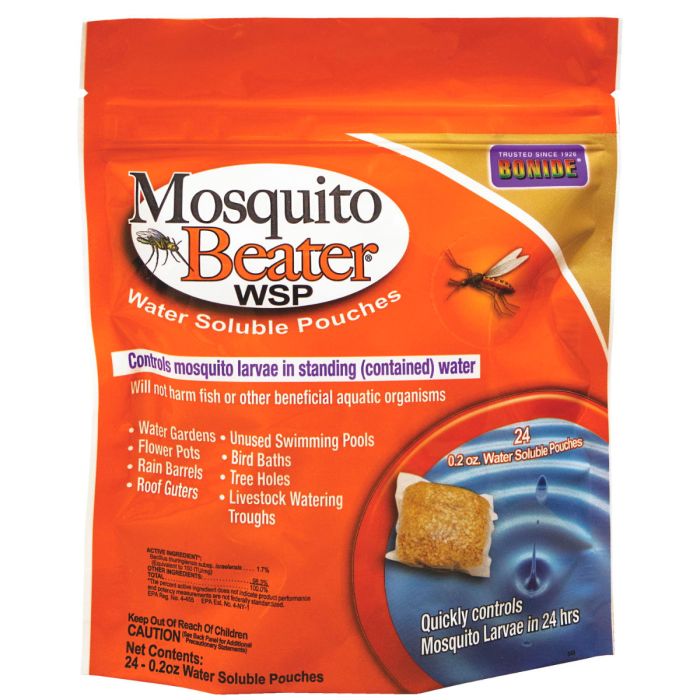
Bonide
Bonide Mosquito Beater Water Soluble Pouches
Bti (Bacillus thuringiensis israelensis) 1.7%
Larval control

Summit
Summit Mosquito Dunks
Bti (Bacillus thuringiensis israelensis)
Larval control
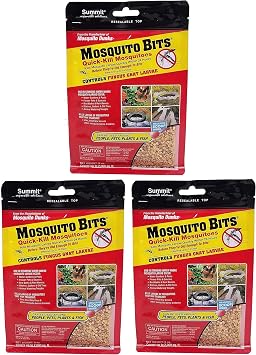
Summit
Summit Mosquito Bits
Bti (Bacillus thuringiensis israelensis)
Larval control

Microbe-Lift
Microbe-Lift BMC Biological Mosquito Control
Bti (Bacillus thuringiensis israelensis)
Larval control
Regulatory notes
EPA-registered microbial biopesticide (Bacillus thuringiensis subsp. israelensis). It is not a 25(b) minimum-risk substance; it carries full EPA registration and product-specific EPA registration numbers (for example Summit Mosquito Dunks, EPA Reg. No. 6218-47). The EPA and CDC list Bti larvicides among recommended tools for treating standing water, and the WHO has evaluated Bti for use even in drinking-water containers.
Safety notes
Not a skin-applied product, so dermal sensitization and irritation are not the relevant exposure routes. Bti has a long record of use with a very low hazard profile; the WHO background document concluded it can be used to control mosquito and black fly larvae in drinking-water sources at recommended doses without appreciable risk to human health. Ordinary label hygiene applies: keep the product out of reach of children, do not eat it, and wash hands after handling. It is intended for standing water you cannot drain or dump, so the first-line advice remains to remove or empty standing water where you can and treat what is left.