Source control
Larvicides & source controlSource control: kill mosquitoes in the water before they can bite
The cheapest, safest way to shrink a mosquito population is to kill the larvae in standing water. Bti is the workhorse, and a couple of other larvicides fit specific jobs.
Updated July 24, 2026 · Reviewed against our scoring methodology
Most mosquito products fight the adults that are already looking for you. Source control fights them a step earlier, in the water where they hatch, and it is the single most cost-effective thing a homeowner can do. The order never changes: drain the water you can, and treat the water you cannot with a larvicide. It is the approach the CDC, EPA, and mosquito-control districts build their programs around.
How to do it
Find the water
Mosquitoes breed in still water that sits for more than a few days: birdbaths, rain barrels, clogged gutters, plant saucers, ponds, low spots, old tires, tarps. Walk your yard after it rains.
Drain what you can
The best larvicide is a tipped-over bucket. Empty anything you do not need to keep. This alone removes most of the breeding.
Treat what you can't drain
Drop a Bti dunk (or a scatter of Bits for faster or smaller jobs) into the water you have to keep. One dunk treats about 100 square feet of surface for roughly 30 days.
Reapply on schedule
Larvicides break down, so replace them through the season and after heavy rain refills a source. Bti runs about a month; a methoprene briquet can stretch longer.
Bti: the workhorse
Bti is short for Bacillus thuringiensis israelensis, a naturally occurring soil bacterium. When mosquito larvae eat it, its proteins rupture their gut and they die before they can grow into biting adults. The key word is target-specific: those proteins only affect the larvae of mosquitoes, black flies, and fungus gnats. Fish, frogs, birds, bees, pets, and people are not harmed, which is why it is approved even for water that animals drink from. In field programs, Bti larviciding has cut local larval and adult mosquito numbers by well over 90 percent.
Why it is the standout
It is the rare mosquito product that scores high on both effectiveness and safety. Foggers work briefly and kill pollinators; UV traps and gadgets do nothing. A dunk quietly removes the next generation of biters for a couple of dollars a month, without collateral damage.
Beyond Bti: two other larvicides
Bti is the default, but two other actives in our catalog do the same job a different way. Methoprene (Altosid, and the Pre-Strike torpedo) is an insect growth regulator: it does not poison larvae, it stops them from ever maturing into adults, and a slow-release form can control a site for up to a month or more. Spinosad (Natular) is a second biological larvicide, fermented from a soil bacterium, with strong larval kill and a reduced-risk profile, handy where you want a fast-dispersing tablet or a rotation. All three are legitimate; Bti is simply the cheapest and most widely available.
Larvicides we score
Bti pouches, dunks, and bits, plus methoprene and spinosad options.
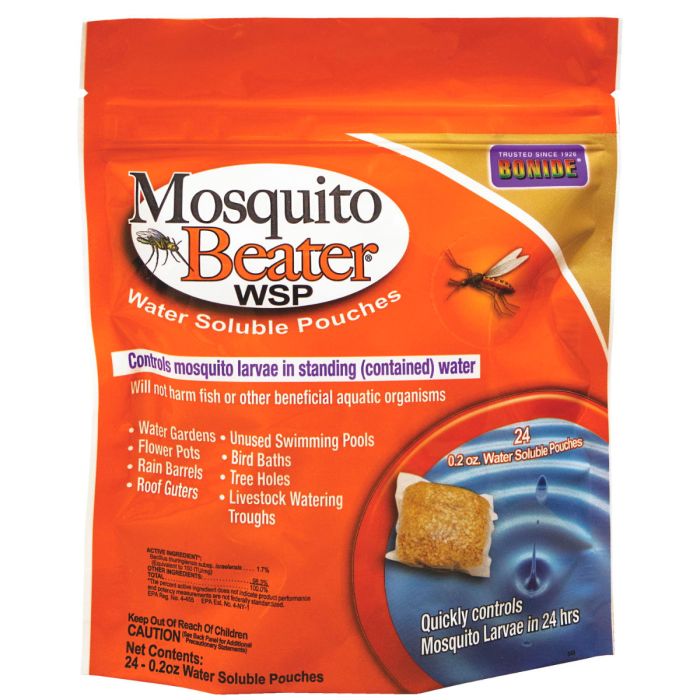
Bonide
Bonide Mosquito Beater Water Soluble Pouches
Bti (Bacillus thuringiensis israelensis) 1.7%
Larval control

Summit
Summit Mosquito Dunks
Bti (Bacillus thuringiensis israelensis)
Larval control
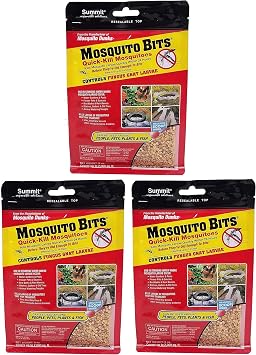
Summit
Summit Mosquito Bits
Bti (Bacillus thuringiensis israelensis)
Larval control

Central Life Sciences
Altosid Pro-G Mosquito Larvicide Granules
S-methoprene 1.5%
Larval control
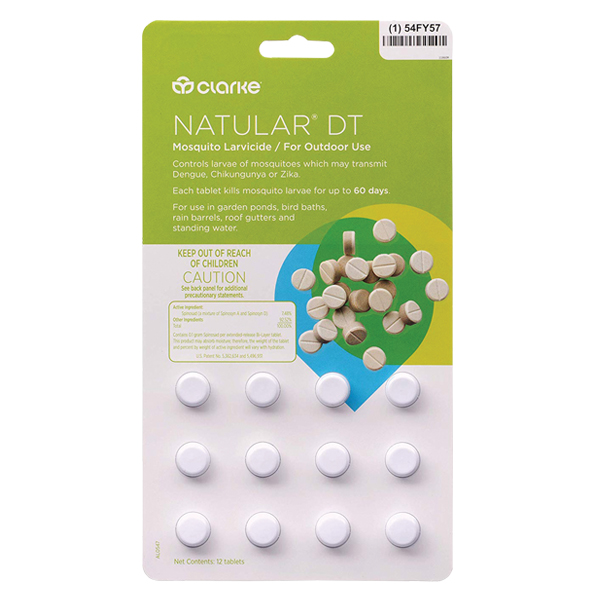
Clarke
Natular DT Mosquito Larvicide Tablets
Spinosad 7.48%
Larval control
Skip the cedar-oil larvicides
Cedar-oil concentrates marketed to pour on standing water are not EPA-reviewed larvicides and have no field evidence of larval control at their labeled rates. Cedar oil can kill larvae in a lab dish, but that is not the same as controlling a real breeding site. Stick with Bti, methoprene, or spinosad.
The honest caveat
Source control lowers the future population; it does not stop the mosquito biting you right now. Treat your standing water, and your neighbors' if you can, but still keep a skin repellent for the bites that come from beyond your yard.
Common questions
- Are mosquito dunks safe for fish and pets?
- Yes. Bti is target-specific to the larvae of mosquitoes, black flies, and fungus gnats. It is documented safe for fish, amphibians, birds, bees, pets, and people by the EPA, WHO, and CDC, and is approved for use in water sources such as birdbaths and rain barrels.
- How long does a mosquito dunk last?
- About 30 days per dunk, and one dunk treats roughly 100 square feet of surface water. Replace them monthly through mosquito season and after heavy rain.
- Do larvicides actually reduce bites?
- They reduce the mosquito population by killing larvae before they mature, which lowers biting over time in and around a treated area. They are source control, not on-the-spot protection, so pair them with a skin repellent for immediate bites.
- Bti, methoprene, or spinosad, which should I use?
- Bti (Mosquito Dunks and Bits) is the cheapest and most available and is the right default. Methoprene (Altosid, Pre-Strike) is a growth regulator that stops larvae from emerging and can last longer per treatment. Spinosad (Natular) is a second biological option with strong larval kill. All three are legitimate source-control larvicides.
- Do cedar-oil larvicides work?
- There is no field evidence that cedar-oil concentrates control mosquito larvae in real standing water at their labeled rates, and they are not EPA-reviewed larvicides. Cedar oil can kill larvae in a lab dish, but that does not translate to a real breeding site. Use Bti, methoprene, or spinosad instead.