Traps
Do mosquito traps work?Do mosquito traps work? What to know before you buy one
Some traps genuinely thin a mosquito population; others catch everything but the mosquitoes. The difference comes down to how the trap finds its target.
Updated July 24, 2026 · Reviewed against our scoring methodology
Mosquito traps are a crowded, confusing category, and the honest answer to whether they work is that it depends entirely on the type. The dividing line is how the trap attracts mosquitoes. Host-seeking female mosquitoes, the ones that bite, home in on carbon dioxide, body heat, and the smell of skin. A trap that imitates those cues can catch biting mosquitoes. A trap that relies on light mostly cannot, because biting mosquitoes are barely drawn to light. Get that one distinction right and most of the marketing sorts itself out.
The traps with real evidence: CO2 and lure traps
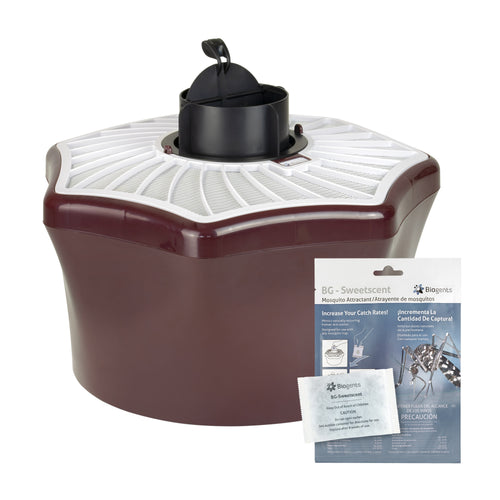
CO2 and lure traps, like the Biogents BG-Mosquitaire and the propane Mosquito Magnet, generate carbon dioxide (from a tank or by burning propane), often add heat and a skin-scent lure, and use a fan to vacuum approaching mosquitoes into a net. These target the right cue, and the best of them are used in real mosquito surveillance and suppression programs. In published field trials, networks of Biogents traps have cut biting of container-breeding Aedes mosquitoes by half or more, reaching about 87 percent in one five-week study.
The catch, and it is a big one, is deployment. Those strong results come from multiple traps ringing a property or a neighborhood, well placed and run continuously through the season. A single unit in one backyard does far less, on the order of 10 to 30 percent, and results swing widely with placement and how many people and pets nearby are competing for the mosquitoes' attention. Propane traps like the Mosquito Magnet are the weakest of the group: an independent review found they could not demonstrate a meaningful reduction in biting pressure. Treat a lure trap as a season-long commitment that supplements repellents and source control, not a one-box fix.
Placement matters more than you think
A lure trap works by pulling mosquitoes toward it, so putting it next to where you sit draws them past you first. Place it out between the mosquitoes' shady, damp harborage and the area you want to protect, not on the patio.
The traps that do not reduce biting: UV, zappers, and tubes
UV light and fan traps (DynaTrap, Katchy) and electric bug zappers attract insects with light, which is the wrong cue. Independent university studies are consistent: mosquitoes make up only a few percent of what these devices catch, often under 5 percent, and controlled trials found no difference in yard mosquito numbers with or without them. The overwhelming majority of the catch is moths, midges, beetles, and other non-biting, often beneficial insects. Some, like DynaTrap, claim a titanium-dioxide surface makes trace carbon dioxide, but the amount is trivial next to a person's breath.
Attractant tubes like the Spartan Mosquito Eradicator are a separate cautionary tale: a plastic tube of salt, sugar, and yeast marketed to kill mosquitoes for 90 days. Independent testing found it did not attract or reduce mosquitoes, the maker never submitted efficacy data, and the product has drawn class actions and sales bans in several states. Indoor UV-and-glue traps like Katchy are genuinely useful against fruit flies and fungus gnats, just not mosquitoes.
Where traps sit in a real plan
Traps are, at best, a supplement. Protecting the zone you sit in with a spatial device, treating standing water with a larvicide, and using a skin repellent all beat a single trap. A well-deployed lure trap can add to that; a light trap or a tube cannot.
Traps we score
The lure traps with real evidence rank first; the light and tube traps are gated for no demonstrated efficacy.
Biogents
Biogents BG-Mosquitaire CO2 Mosquito Trap
Trap
Coverage & effectiveness

Biogents
Biogents BG-Home Indoor Mosquito Trap
Trap
Coverage & effectiveness

Mosquito Magnet
Mosquito Magnet Executive (MM3300B)
Trap
Coverage & effectiveness

Mosquito Magnet
Mosquito Magnet Patriot Plus Propane Mosquito Trap
Trap
Coverage & effectiveness

Biogents
Biogents BG-GAT (Gravid Aedes Trap)
Trap
Coverage & effectiveness
Biogents
Biogents BG-Sentinel 2
Trap
Coverage & effectiveness
Common questions
- Do mosquito traps actually work?
- It depends on the type. CO2 and lure traps such as the Biogents imitate the cues biting mosquitoes follow and can genuinely thin a local population, though a single backyard unit does little and the real results come from running several all season. UV light traps, zappers, and attractant tubes do not reduce mosquito biting.
- Is the DynaTrap effective for mosquitoes?
- No. DynaTrap and similar UV light and fan traps catch mostly moths, midges, and other non-biting insects. Independent studies find mosquitoes are only a few percent of the catch and no difference in yard mosquito numbers with or without the device.
- Does the Mosquito Magnet work?
- It catches mosquitoes, but the evidence that it meaningfully reduces biting is weak. Propane CO2 traps are the least effective of the lure traps, and an independent review found they could not demonstrate a meaningful reduction in biting pressure. Results build slowly over weeks and vary a lot by site.
- Where should I put a mosquito trap?
- Away from where you sit. A lure trap pulls mosquitoes toward it, so place it out between their shady, damp resting areas and the space you want to protect. Set on the patio, it draws mosquitoes past you.