Foggers
Do mosquito foggers work?Do mosquito foggers work? What to know before you fog
Foggers really do knock down the mosquitoes in your yard, for a few hours. What they do not do is keep them away, and they hit pollinators on the way.
Updated July 24, 2026 · Reviewed against our scoring methodology
A mosquito fogger, whether a propane thermal fogger or an aerosol can, heats or sprays a pyrethroid insecticide into a fine cloud that kills flying insects on contact. That part is real: fog your yard and the mosquitoes in the air right then largely drop. The problem is everything after. Foggers are the most misunderstood mosquito product because the immediate result looks impressive and the lasting result is close to zero.
What the evidence shows
Immediately after fogging, biting can fall sharply for the first several minutes to a couple of hours. But the insecticide disperses fast outdoors and leaves almost no residue on an open yard, so untreated mosquitoes move back in from around the property. The best field data on outdoor pyrethroid fogging show the effect fading within roughly a day or two, and extension services say plainly that a fog will not last more than a day or two because of migration. It also does nothing to the eggs and larvae in standing water, so the next generation is unaffected.
The one job foggers are good at
Short-term knockdown before an outdoor event. Fog the yard fifteen to thirty minutes before guests arrive and you clear the flying adults for the evening. That is the honest use case, and it is a legitimate one.
The costs the marketing skips
Pyrethroids are non-selective. At label rates they are toxic to bees and other pollinators, and highly toxic to fish and aquatic invertebrates, which is why every label warns against fogging blooming plants or near water. Routine calendar fogging also drives insecticide resistance: studies of space spraying against resistant mosquitoes found it killed only a fraction of them and produced no measurable drop in field populations. Professional mosquito districts fog only when surveillance justifies it, with calibrated equipment, as one part of a larvicide-first program, which is the opposite of spraying a backyard on a schedule.
Not a routine
Because they are short-lived, non-selective, and hard on pollinators, foggers make a poor routine. If your yard keeps filling back up, the fix is finding and treating the standing water, not fogging more often.
Foggers we score
Scored as a situational tool: real knockdown, no residual, tempered accordingly.

Black Flag
Black Flag Propane Insect Fogger
Phenothrin 0.15%
Coverage & effectiveness

Black Flag
Black Flag Electric Insect Fogger (Model 190107)
Tetramethrin 0.10% · Permethrin 0.25%
Coverage & effectiveness

Bonide
Bonide Mosquito Beater Flying Insect Fog
Phenothrin 0.15%
Coverage & effectiveness

Repel
Repel Propane Insect Fogger (Model 190397)
Tetramethrin 0.10% · Permethrin 0.25%
Coverage & effectiveness
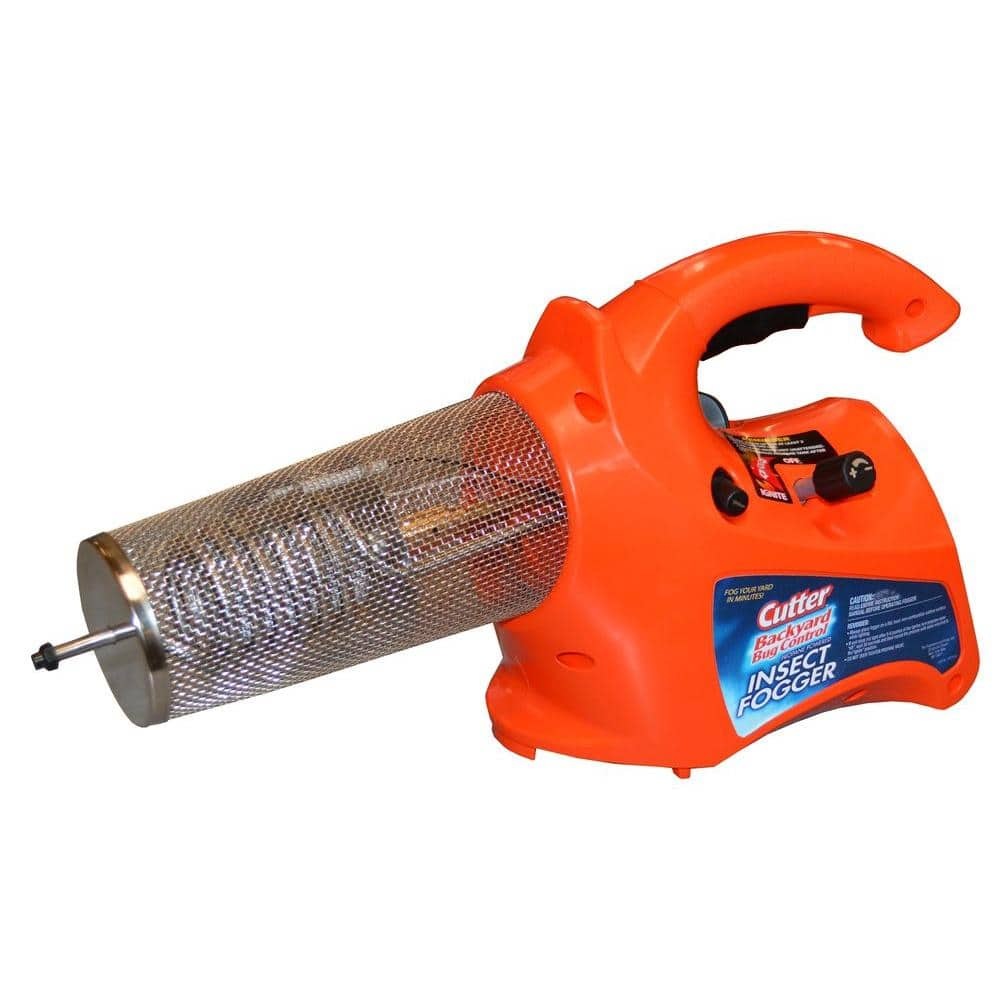
Cutter
Cutter Propane Insect Fogger
Phenothrin 0.15%
Coverage & effectiveness
Common questions
- Do mosquito foggers actually work?
- For a few hours, yes. A fogger knocks down the flying mosquitoes in a treated yard on contact. But it leaves almost no residue, so mosquitoes move back in within a day or two, and it does nothing to larvae in standing water. It is an event tool, not a control plan.
- How long does mosquito fogging last?
- Not long. Outdoors the insecticide disperses quickly with little residual, and populations typically return within a day or two as mosquitoes migrate in from surrounding areas.
- Are mosquito foggers safe for bees and pets?
- The pyrethroids in foggers are non-selective and toxic to bees and other pollinators, and highly toxic to fish and aquatic life. Keep the fog off blooming plants and away from water, and keep people and pets out of the area until it clears.
- Should I fog my yard for mosquitoes?
- Only situationally, such as clearing an area shortly before an outdoor event. As a routine it is short-lived, harms pollinators, and can drive resistance. Treating standing water and protecting the spot where you sit works better.