Metofluthrin
Cyclopropanecarboxylic acid, 2,2-dimethyl-3-(1-propen-1-yl)-, [2,3,5,6-tetrafluoro-4-(methoxymethyl)phenyl]methyl ester
Metofluthrin is a synthetic pyrethroid used as the active vapor in modern battery- and heat-powered spatial repellent devices such as the Thermacell E-series and EX-series and the OFF! Clip-On. It is not applied to skin. A small amount is warmed so it evaporates and forms a protective zone of vapor that repels and disorients mosquitoes before they land. It is EPA-registered for this use. Field trials show a metofluthrin emanator creates roughly a 15 by 15 foot zone (about a 5 meter radius) of reduced biting. Like all pyrethroids it is highly toxic to fish and aquatic invertebrates, so devices should not be used over or beside water.
How it works
Metofluthrin is a fast-acting Type I pyrethroid. It binds to voltage-gated sodium channels in insect nerve membranes and holds them open, causing repetitive firing, loss of coordination, knockdown, and repellency before a mosquito bites. Because it is volatile it works in the vapor phase, protecting an area rather than a treated surface. Its half-life in air is short, roughly 1.7 to 1.9 hours (EPA), which limits buildup and non-target exposure in outdoor use.
Safety around dogs & cats
Cats are the sensitive species for every pyrethroid because they lack the glucuronidation capacity to clear them efficiently (ASPCA, Pet Poison Helpline, VCA), so keep cats away from the device and never let one mouth a warm cartridge or pad. Real-world risk from the outdoor vapor of an emanator is lower than from a skin or spot-on product, and the short half-life in air limits buildup, but cats warrant more caution than dogs, which tolerate pyrethroids well (Merck Veterinary Manual). Do not run a device in an enclosed space with a pet bird. This is not a product to apply to any animal.
Moderate confidence. Ratings from ASPCA Animal Poison Control, the Pet Poison Helpline, and published veterinary toxicology. This is general information, not veterinary advice. If your pet is exposed, call your vet or the ASPCA Animal Poison Control Center at (888) 426-4435.
The evidence
Peer-reviewed hut and field trials (for example PMC10531799 and PMC10768102) show metofluthrin emanators meaningfully reduce mosquito landing and biting, including against some pyrethroid-resistant Aedes and Anopheles populations, over a limited zone of a few meters. Protection is spatial and area-based rather than the whole-body coverage of a skin repellent.
- Volatile pyrethroid spatial repellents for preventing mosquito bites: a systematic review and meta-analysis2025Meta AnalysisDefinitive evidence
Meta-analysis of 84 studies and about 1.39 million mosquitoes on volatile pyrethroid spatial repellents.
- Experimental hut and field evaluation of a metofluthrin-based spatial repellent against pyrethroid-resistant Anopheles funestus in Siaya County, western Kenya2024Field TrialWell-supported evidence
This study, run in experimental huts and open field settings in Siaya County in western Kenya, tested a metofluthrin emanator against Anopheles funestus, a major malaria mosquito. What makes it especially useful is that this local mosquito population is pyrethroid-resistant, meaning it has evolved to shrug off the pyrethroid insecticides used on bed nets and in sprays. The researchers wanted to know whether an airborne metofluthrin device could still protect people even when the mosquitoes are resistant to that chemical class, measuring how many mosquitoes landed indoors and at increasing distances outdoors.
- Experimental evaluation of a metofluthrin passive emanator against Aedes albopictus2022Field TrialWell-supported evidence
Field evaluation of a metofluthrin passive emanator at varying distances indoors and outdoors.
- The entomological impact of passive metofluthrin emanators against indoor Aedes aegypti: A randomized field trial2021RctDefinitive evidence
Randomized field trial of passive metofluthrin emanators in 100 treated versus 100 control houses in Mexico.
- An Expert Review of Spatial Repellents for Mosquito Control2020ReviewWell-supported evidence
This is a commissioned expert review, not a single experiment, that pulled together the published evidence on spatial repellents. Spatial repellents are the family of products that put a volatile insecticide into the air around you rather than on your skin, which is the category that includes battery or heat-powered emanators such as Thermacell and the OFF! Clip-On, passive strips, and the older mosquito coil. The review walks through how these devices work, which airborne active ingredients drive them, and what protection they have delivered in controlled and semi-field testing, with the goal of judging whether the category is promising enough for public-health investment.
- OFF! Clip-on Repellent Device With Metofluthrin Tested on Aedes aegypti for Mortality at Different Time Intervals and Distances2016LabLimited evidence
This was a controlled laboratory study, not a backyard trial, designed to map exactly how far the OFF! Clip-On's metofluthrin actually reaches. The researchers exposed caged Aedes aegypti mosquitoes, the yellow fever and dengue vector, at set distances from the running device and at different time intervals, then recorded knockdown and death. The point was to test the intuitive question every buyer has: does one of these clip-on emanators really protect a whole area around you, or only the air right next to it?
- Field evaluation of four spatial repellent devices against Arkansas rice-land mosquitoes2014Field TrialWell-supported evidence
Field comparison of four spatial repellent devices, including the OFF! Clip-On and Thermacell, using surrogate-human trap sites.
- Field Evaluation of the OFF! Clip-On Mosquito Repellent (Metofluthrin) Against Aedes albopictus and Aedes taeniorhynchus2012Field TrialWell-supported evidence
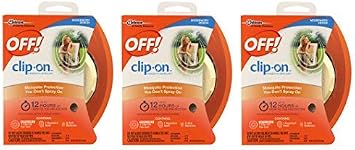
This trial tested the OFF! Clip-On, a small battery-powered fan device that blows air across a metofluthrin-treated pad to build a repellent cloud around the wearer, in outdoor conditions in northeastern Florida. The researchers wanted to know how well a wearable emanator actually protects a person from bites in the field, so they compared biting rates on volunteers using the running device against unprotected controls. They looked at two mosquitoes: Aedes albopictus, the Asian tiger mosquito that is a common backyard biter, and Aedes taeniorhynchus, an aggressive coastal saltmarsh mosquito.
- Field Evaluation of the Off! Clip-On Mosquito Repellent (Metofluthrin) Against Aedes albopictus and Aedes taeniorhynchus in Northeastern Florida2012Field TrialWell-supported evidence
Human-subject field trial of the OFF! Clip-On metofluthrin emanator at two Florida sites.
Products using it

Thermacell
Thermacell EX90 Rechargeable Mosquito Repeller
Metofluthrin 5.5%
Coverage & effectiveness

Thermacell
Thermacell E55 Rechargeable Mosquito Repeller
Metofluthrin 5.5%
Coverage & effectiveness

Thermacell
Thermacell E90 Rechargeable Mosquito Repeller
Metofluthrin 5.5%
Coverage & effectiveness

Thermacell
Thermacell Radius Zone Rechargeable Mosquito Repeller
Metofluthrin 5.5%
Coverage & effectiveness

OFF!
OFF! Mosquito Lamp
Metofluthrin 9.10%
Coverage & effectiveness
OFF!
OFF! Clip-On Mosquito Repellent
Metofluthrin 31.2%
Coverage & effectiveness
Regulatory notes
EPA-registered active ingredient (PC code 109709) for spatial and personal emanator devices. EPA's registration review found that at labeled use none of the agency's Levels of Concern were exceeded for birds, mammals, fish, or aquatic invertebrates, largely because the amount released and the short half-life in air keep environmental exposure low. Devices are labeled for outdoor and well-ventilated use.
Safety notes
This is not a skin-applied product, so dermal sensitization and irritation are not the relevant exposure routes. The main human caution is inhalation of the vapor: EPA classed metofluthrin end-use products as slightly toxic by inhalation, so run the device outdoors or in a well-ventilated space and avoid deliberately breathing the vapor stream. Keep devices away from ponds, streams, and aquariums.