Allethrin
Cyclopropanecarboxylic acid, 2,2-dimethyl-3-(2-methyl-1-propen-1-yl)-, 2-methyl-4-oxo-3-(2-propen-1-yl)-2-cyclopenten-1-yl ester
EPA Substance Registry Services (SRS) listed active ingredient for pesticide products.
Safety around dogs & cats
Cats are acutely sensitive to allethrin and every other pyrethroid because they cannot glucuronidate them efficiently (ASPCA, Pet Poison Helpline, VCA, MSPCA-Angell), so even small exposures can cause drooling, tremors, and neuroexcitation. Do not let a cat mouth a mat, coil, or cartridge, and run devices where a cat cannot reach the source. Dogs tolerate pyrethroids well, with problems mainly at large or concentrated exposures (Merck Veterinary Manual). Keep pet birds out of an enclosed space with a burning coil or running emanator. Never apply to any pet.
High confidence. Ratings from ASPCA Animal Poison Control, the Pet Poison Helpline, and published veterinary toxicology. This is general information, not veterinary advice. If your pet is exposed, call your vet or the ASPCA Animal Poison Control Center at (888) 426-4435.
The evidence
Allethrin and its d-isomers are among the oldest synthetic pyrethroids used in mosquito coils and heat emanators. Field studies show real short-range spatial protection, often cutting bites 70 to 90 percent within a small treated zone for a few hours, though efficacy is inconsistent against Aedes and drops off with wind and distance from the device.
- Volatile pyrethroid spatial repellents for preventing mosquito bites: a systematic review and meta-analysis2025Meta AnalysisDefinitive evidence
This is the most rigorous look at the whole category to date: a systematic review and meta-analysis that pooled data from 58 eligible publications on volatile pyrethroid spatial repellents, the airborne-emanator products built on actives such as transfluthrin, metofluthrin, and allethrin. For 50 of those studies the authors combined individual mosquito-level records, more than 1.7 million mosquitoes in total, along with satellite weather data on temperature, humidity, and wind, so they could estimate an overall protective efficacy and see how it shifts by product format, active ingredient, mosquito species, and indoor versus outdoor setting. This is the single best study for setting honest expectations about what these devices deliver on average.
- An Expert Review of Spatial Repellents for Mosquito Control2020ReviewWell-supported evidence
This is a commissioned expert review, not a single experiment, that pulled together the published evidence on spatial repellents. Spatial repellents are the family of products that put a volatile insecticide into the air around you rather than on your skin, which is the category that includes battery or heat-powered emanators such as Thermacell and the OFF! Clip-On, passive strips, and the older mosquito coil. The review walks through how these devices work, which airborne active ingredients drive them, and what protection they have delivered in controlled and semi-field testing, with the goal of judging whether the category is promising enough for public-health investment.
- Environmental health risks and benefits of the use of mosquito coils as malaria prevention and control strategy2018ReviewWell-supported evidence
The mosquito coil is the oldest and cheapest airborne repellent device, a spiral you light so that it smolders and releases a pyrethroid such as allethrin or pyrethrins into the air. This review weighed both sides of the coil: how much it actually protects against mosquitoes, and what the smoke does to the people breathing it. It is a helpful reality check for anyone reaching for coils as a low-cost area repellent, because it puts modest efficacy next to a real air-quality cost.
- Application of mosquito repellent coils and associated self-reported health issues in Ghana2016Field Trial
Cross-sectional survey of coil users and self-reported respiratory health.
- A systematic review of mosquito coils and passive emanators: defining recommendations for spatial repellency testing methodologies2012ReviewWell-supported evidence
Systematic review of the spatial repellency of mosquito coils and passive emanators.
- Do mosquito coils prevent malaria? A systematic review of trials2004ReviewWell-supported evidence
Systematic review of whether mosquito coils reduce bites and prevent malaria.
- Mosquito coil emissions and health implications2003Lab
Emissions study of six mosquito coil brands and their air-quality and health implications.
- Field evaluation of an area repellent system (Thermacell) against Phlebotomus papatasi and Ochlerotatus caspius in Sanliurfa Province, Turkey2003Field TrialWell-supported evidence
Field trial of the allethrin Thermacell area repellent at multiple distances over six hours.
- Field efficacy of mosquito coil formulations containing d-allethrin and d-transallethrin against indoor mosquitoes especially Culex quinquefasciatus1990Field TrialWell-supported evidence
Field trial of d-allethrin and d-transallethrin mosquito coils in Malaysian homes, in a Culex-dominated setting.
Products using it
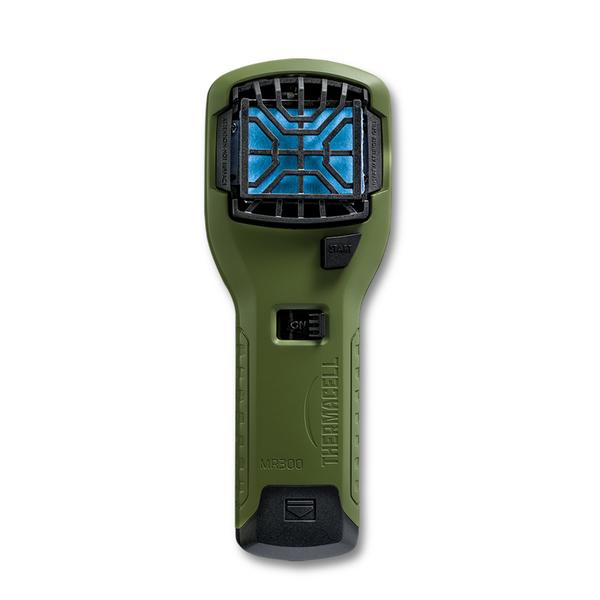
Thermacell
Thermacell Patio Shield MR300 Mosquito Repeller
Allethrin 21.97%
Coverage & effectiveness

Thermacell
Thermacell Backpacker Mosquito Repeller
Allethrin 21.97%
Coverage & effectiveness

PIC
PIC Mosquito Repellent Coils
Allethrin 0.25%
Coverage & effectiveness
Coghlan's
Coghlan's Mosquito Coils
Allethrin 0.25%
Coverage & effectiveness
Regulatory notes
Source: EPA SRS active ingredient list export. Minimum risk (25(b)) status is applied separately when applicable.