IR3535
3-(N-Butyl-N-acetyl)aminopropionic acid, ethyl ester
What is IR3535?
IR3535 is a synthetic amino-acid derivative that's been Europe's quiet workhorse repellent for over 30 years. At 20% it provides roughly 6–8 hours against both mosquitoes and ticks, with one of the gentlest safety profiles of any synthetic.
When to choose it: Families and sensitive skin: long protection with minimal irritation risk. A strong tick performer.
Chemical name ethyl butylacetylaminopropionate, or EBAAP. A synthetic repellent derived from the amino acid beta-alanine, in wide European use since the 1980s and valued for how gentle it is on skin.
How it works
IR3535 disrupts the odorant receptors mosquitoes and ticks use to locate a host, so treated skin stops reading as a target. It does not kill insects.
Safety around dogs & cats
Practically non-toxic with a long safety record in people; incidental contact or a small lick is low risk for dogs and cats. Not an approved on-animal repellent, but of the mainstream actives it and picaridin carry the least pet concern.
Moderate confidence. Ratings from ASPCA Animal Poison Control, the Pet Poison Helpline, and published veterinary toxicology. This is general information, not veterinary advice. If your pet is exposed, call your vet or the ASPCA Animal Poison Control Center at (888) 426-4435.
Mosquito protection by concentration: IR3535
Complete protection time (dark = lower bound, light = upper bound) on the same 12 h scale used across the site. Modeled from published dose-response data in our research library.
The evidence
A 2025 Ghana field trial ran a 20% sustained-release IR3535 against 25% DEET on wild mosquitoes with competitive results, matching older field work in Burkina Faso and Thailand. Tick studies from 2010 and 2015 measured long protection times alongside DEET and picaridin.
- Evaluation of the efficacy of 20% IR3535 with a sustained-release formulation and 25% DEET against mosquitoes in a field setting in Ghana2025Field TrialWell-supported evidence
A 2025 field trial in two rural Ghanaian communities pitted a 20% IR3535 lotion built on a sustained-release technology against a 25% DEET lotion, tested on wild, mostly malaria-vector mosquitoes. Both slashed biting against a control, with IR3535 marginally ahead.
- Repellent efficacy of DEET, Icaridin, and EBAAP against Ixodes ricinus and Ixodes scapularis nymphs (Acari, Ixodidae)2015LabWell-supported evidence
A human-skin study testing whether two lower-strength alternatives, 10% picaridin (icaridin) and 10% IR3535 (EBAAP), can match 20% DEET at repelling the two most important Ixodes tick species. Picaridin came out on top.
- Formulations of Deet, Picaridin, and IR3535 Applied to Skin Repel Nymphs of the Lone Star Tick (Acari: Ixodidae) for 12 Hours2010RctWell-supported evidence
A skin-band study of how well five repellent formulations stop lone star tick nymphs from crossing treated skin, retested every two hours out to 12 hours. Any product with at least 20% active held up all day; a 10% IR3535 lotion did not.
- Field evaluation of the efficacy and persistence of insect repellents DEET, IR3535, and KBR 3023 against Anopheles gambiae complex and other Afrotropical vector mosquitoes2004Field TrialDefinitive evidence
A large field trial in Burkina Faso that benchmarked two newer skin repellents, IR3535 and picaridin (KBR 3023), against the reference standard DEET using wild-biting malaria mosquitoes rather than caged ones. More than 49,000 mosquitoes were collected, about 95% of them the Anopheles gambiae complex that carries most African malaria.
- Laboratory and field evaluations of the insect repellent 3535 (ethyl butylacetylaminopropionate) and deet against mosquito vectors in Thailand2001Field TrialWell-supported evidence
A 2001 Thai study compared IR3535 (chemical name EBAAP) against DEET in the lab and the field across a dozen mosquito vectors. The two were broadly comparable, with IR3535 slightly ahead against most species and DEET clearly better against the forest malaria vector Anopheles dirus.
Products using it
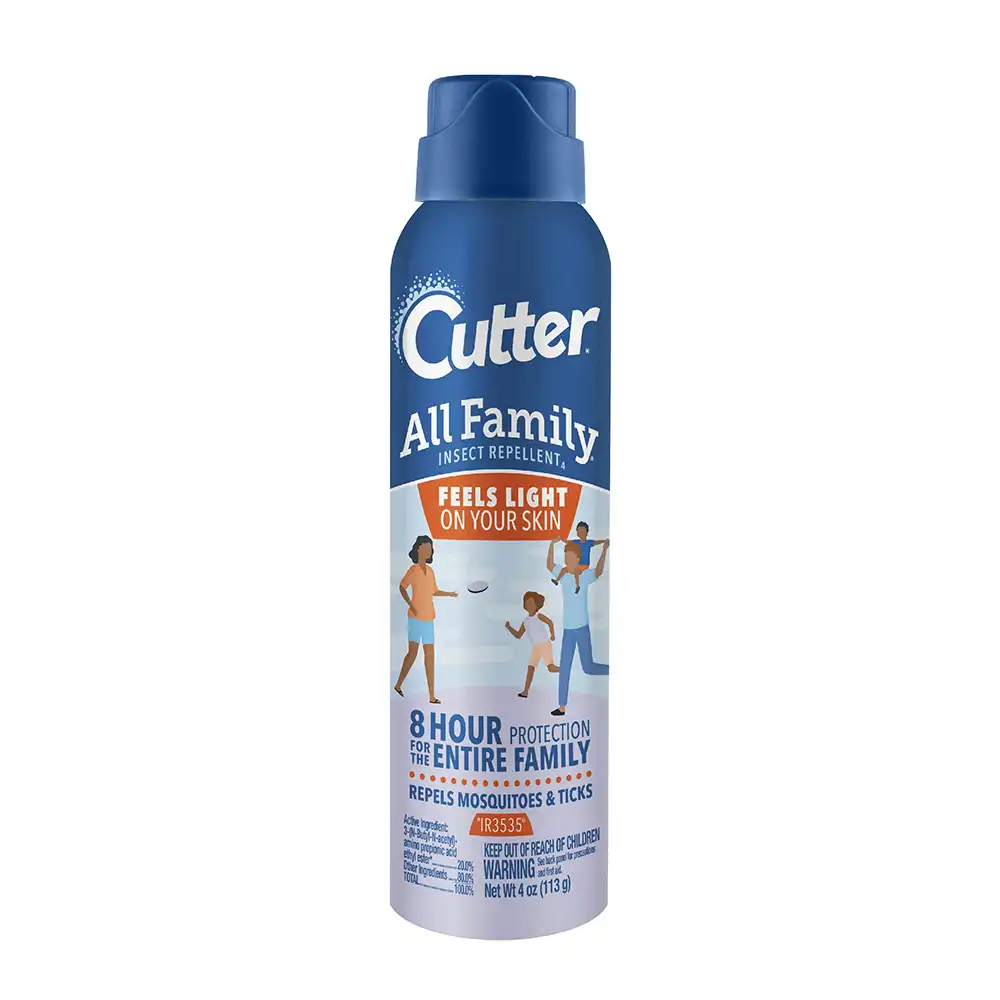
Cutter
Cutter All Family Insect Repellent
IR3535 20%
Complete protection

Zevo
Zevo On-Body Mosquito and Tick Repellent Lotion
IR3535 20%
Complete protection
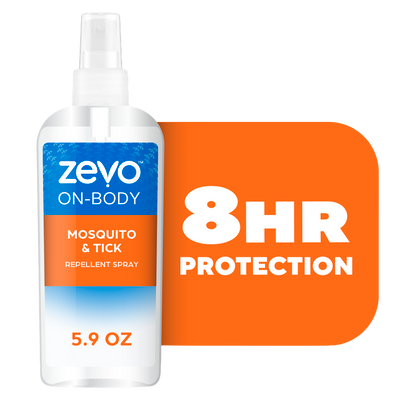
Zevo
Zevo On-Body Mosquito and Tick Repellent Pump Spray
IR3535 20%
Complete protection
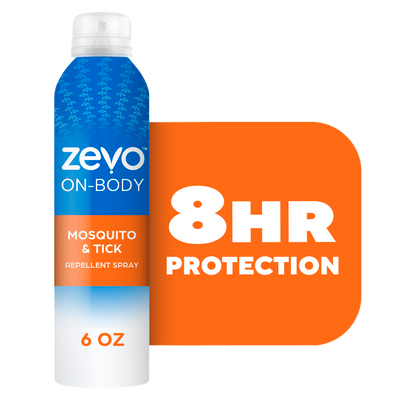
Zevo
Zevo On-Body Mosquito and Tick Repellent Aerosol Spray
IR3535 20%
Complete protection

Not recommended
Combination sunscreen/repellent
Avon
Skin So Soft Bug Guard Plus IR3535 Expedition SPF 30 Pump Spray
IR3535 19.6% · Octocrylene 10%
Complete protection

Not recommended
Combination sunscreen/repellent
Bullfrog
Bullfrog Mosquito Coast Sunscreen + Insect Repellent SPF 50
IR3535 20% · Octocrylene 5%
Complete protection

Not recommended
Combination sunscreen/repellent
Avon
Skin So Soft Bug Guard Plus IR3535 Expedition Aerosol Spray SPF 28
IR3535 20.07% · Octocrylene 9%
Complete protection

Not recommended
Combination sunscreen/repellent
Avon
Skin So Soft Bug Guard Plus IR3535 Gentle Breeze SPF 30 Lotion
IR3535 7.5%
Complete protection
Common misconceptions
Myth: “If it were any good, it would be famous.”
Reality: IR3535 is famous in Europe, where it has anchored Merck-developed repellents since the 1980s. Its low profile in the US is marketing history, not evidence.
Myth: “All 'gentle' repellents are weak.”
Reality: IR3535 at 20% posts protection windows in the same range as mid-to-high DEET, while being mild enough for daily family use.
Regulatory notes
EPA SRS-registered active. Not a FIFRA 25(b) minimum risk active.
Safety notes
Registered as a biopesticide with low irritation and no lower age limit in most guidance, which is why it appears in family products and sunscreen combinations like Avon Skin So Soft and Bullfrog. It stings if it reaches the eyes.
Frequently asked questions
How does IR3535 compare to DEET?
At equal concentrations, broadly comparable against mosquitoes and at least as good against ticks. Its 2025 Ghana field trial pitted 20% IR3535 against 25% DEET with competitive results.
Is IR3535 natural?
No, it's synthetic, though modeled on the natural amino acid β-alanine. It's EPA-registered as a biopesticide.