Indoor control
Indoor mosquito controlHow to get mosquitoes out of your home and stop the bites indoors
Indoors is a different fight. The honest truth about traps, the light-and-wavelength question, and the plan that actually works against day-biting mosquitoes in an apartment.
Updated July 26, 2026 · Reviewed against our scoring methodology
Getting bitten inside your own home is a special kind of miserable, and the internet makes it worse by selling you traps that do not work. So here is the hard truth first: no consumer trap reliably protects you indoors, because you are a stronger attractant than any device on the market. A person breathing out carbon dioxide and radiating body heat is a brighter beacon than any lamp across the room. The mosquito flies to you, not the gadget. The way you win indoors is not a better trap. It is finding and removing the mosquitoes, cutting off where they breed, sealing them out, and protecting yourself while you do it.
It helps to know your enemy. Relentless daytime biting in the southern US and coastal California usually means invasive Aedes, the tiger and yellow-fever mosquitoes. They are homebodies: they rest indoors in dark, humid corners during the day and they breed in astonishingly little water, sometimes inside your home. That changes the plan, and it is good news, because it means there is something concrete to hunt.
The light myth, and why most traps disappoint
The most common mistake is chasing the right light. For day-biting Aedes, light is a weak cue and no wavelength beats a warm human; Aedes aegypti actually avoids UV and prefers shade. UV and blue light traps are built for gnats and fruit flies and catch those well, not the host-seeking mosquitoes that actually bite people, which is why their mosquito reviews split. Fan-suction lure traps do better than passive plug-ins, but they thin a room over days rather than shielding anyone on the spot. Only one trap is actually built for indoor Aedes (the Biogents BG-Home below): it skips light and CO2 and imitates a person instead.
What to skip indoors
UV / blue light traps (Katchy, DynaTrap, and similar)
For gnats, not mosquitoes
They pull in phototactic flies and fruit flies. Day-biting Aedes barely respond to light and even avoid UV, so they do little for the mosquitoes that bite people indoors.
Ultrasonic apps and repellent wristbands
No effect on bites
Controlled studies, including a Cochrane review, find these do not reduce mosquito bites at all.
Plug-in pyrethroid vaporizers, indoors
Off-label in the US
The metofluthrin devices sold here are labeled outdoor-only and warn against enclosed use, and imported plug-in mats are not EPA-registered for US indoor sale. Running one in a sealed room is off-label and an inhalation concern.
The plan that actually works indoors
1. Hunt the indoor breeding water first
This is the highest-value move and the one people skip. Aedes breed in a bottlecap of water. Check plant saucers and the trays under pots, vases and cut-flower water, pet bowls, the drip tray under the fridge and the AC condensate pan, sink and floor drains, and any forgotten cup or bottle. Flower-pot saucers are one of the most common indoor Aedes nurseries. Dump and scrub everything you can, and drop a fragment of a Bti dunk in any water you must keep. If they are hatching inside, no trap will ever keep up.
2. Kill the one hunting you now
For the mosquito already in the room and on you, a handheld electric swatter racket is the fastest honest fix. Slow, low passes near your ankles and under the table catch the day-biters approaching from shade.
3. Find where they rest and knock them down
Aedes spend the day in dark, humid, low places: under the bed and furniture, behind curtains and hanging clothes, in closets and the bathroom, under the sink. Look there, and clear what you find with the swatter or a household insecticide labeled for indoor flying insects, following its directions.
4. Seal them out
If any are getting in, screens are the fix. Check every window and door screen for gaps and tears, add a door sweep, and keep any window without an intact screen shut. Remember they also ride in on you and slip through a propped or briefly opened door.
5. Protect yourself, especially for sleep
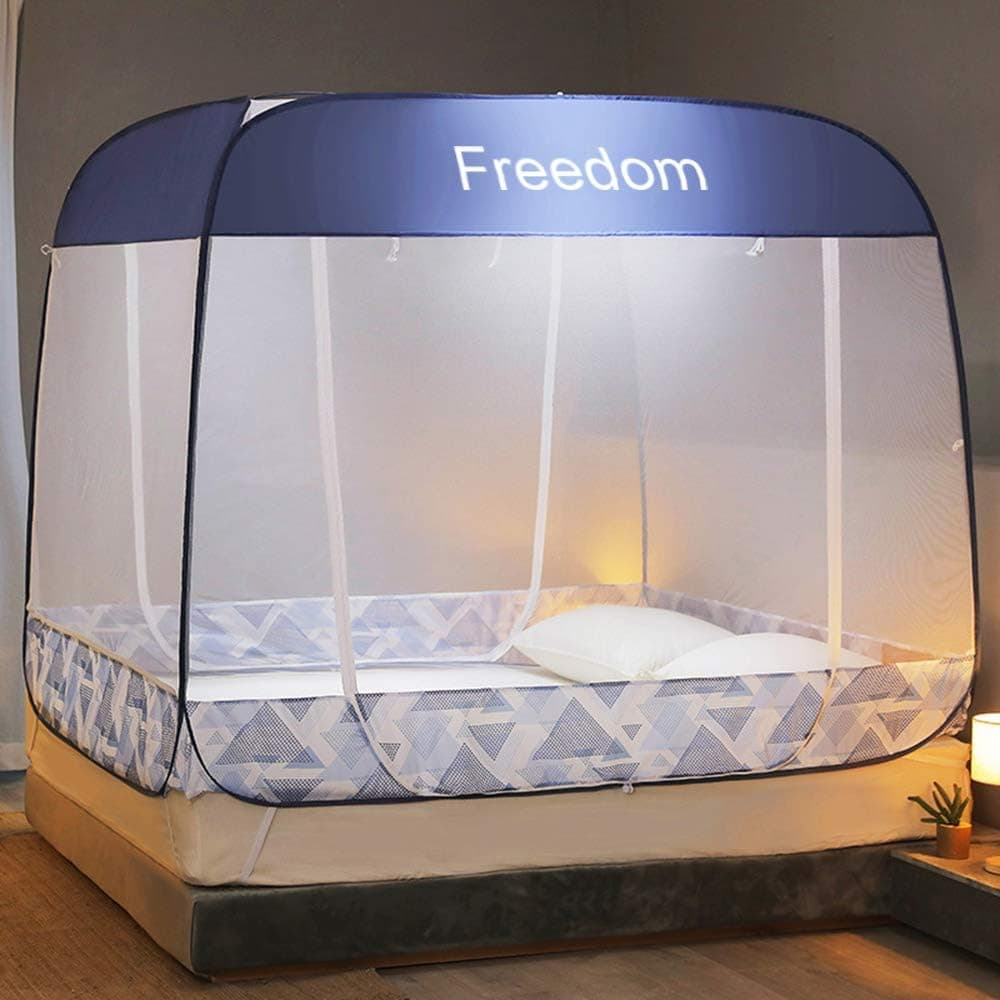
Keep using an EPA-registered skin repellent (DEET, picaridin, IR3535, or oil of lemon eucalyptus) even indoors while you fight this; it is the reliable backstop. For sleeping, a fine-mesh pop-up bed net gives you a guaranteed safe zone that does not depend on any device working. A fan aimed at where you sit helps too, since these weak fliers cannot push through the breeze and it scatters your scent.
6. Thin the population with a real trap, over time
If you want a trap, get one actually built for mosquitoes with the cues they follow (the Biogents BG-Home is the indoor option), and treat it as something that lowers the indoor population over days, not something that shields you on the spot.
DIY hacks, honestly
The sugar-and-yeast carbon dioxide bottle trap that circulates online has little real-world evidence and does not out-bait a person in the room, so it is not a main plan. The DIY move that genuinely helps is a box fan aimed across the seating or sleeping area. And a splash of dish soap or a Bti fragment in any standing water that cannot be dumped kills the larvae for free.
The tools worth buying
The fastest way to kill the mosquito already indoors, plus the one trap actually built for indoor Aedes (though it is frequently out of stock and sold mainly through Biogents direct).


And a barrier for sleep
Not a scored product, just the most reliable protection if you are getting bitten in bed.
Common questions
- Do indoor mosquito traps actually work?
- Not for protecting you on the spot. No consumer trap out-competes a live person, because you emit the carbon dioxide, heat, and skin odor mosquitoes follow. Light traps like Zevo mostly catch gnats and flies. The one indoor trap built for day-biting Aedes (the Biogents BG-Home) can thin the population over time using visual contrast, a warm air plume, and scent, but it is a supplement, not a shield.
- What color light attracts mosquitoes?
- For the day-biting Aedes most likely biting you indoors, light is a weak cue and no wavelength reliably beats a warm human. Aedes aegypti actually tends to avoid UV light and prefers shade. UV and blue light traps mainly pull in gnats, fruit flies, and house flies, not host-seeking mosquitoes.
- How are mosquitoes getting in with the windows closed?
- Often they are already inside, breeding in tiny indoor water like plant saucers, vases, drains, or the AC drip tray, and resting in dark corners by day. They also ride in on you or slip through a briefly opened or unscreened door. Hunt the indoor water first, then check screens and door gaps.
- What actually kills mosquitoes in an apartment fast?
- For the one on you, an electric swatter racket. For the source, dump and scrub every bit of standing water indoors and treat what you must keep with a Bti fragment. For sleep, a fine-mesh bed net. Keep an EPA-registered skin repellent on while you work through it.