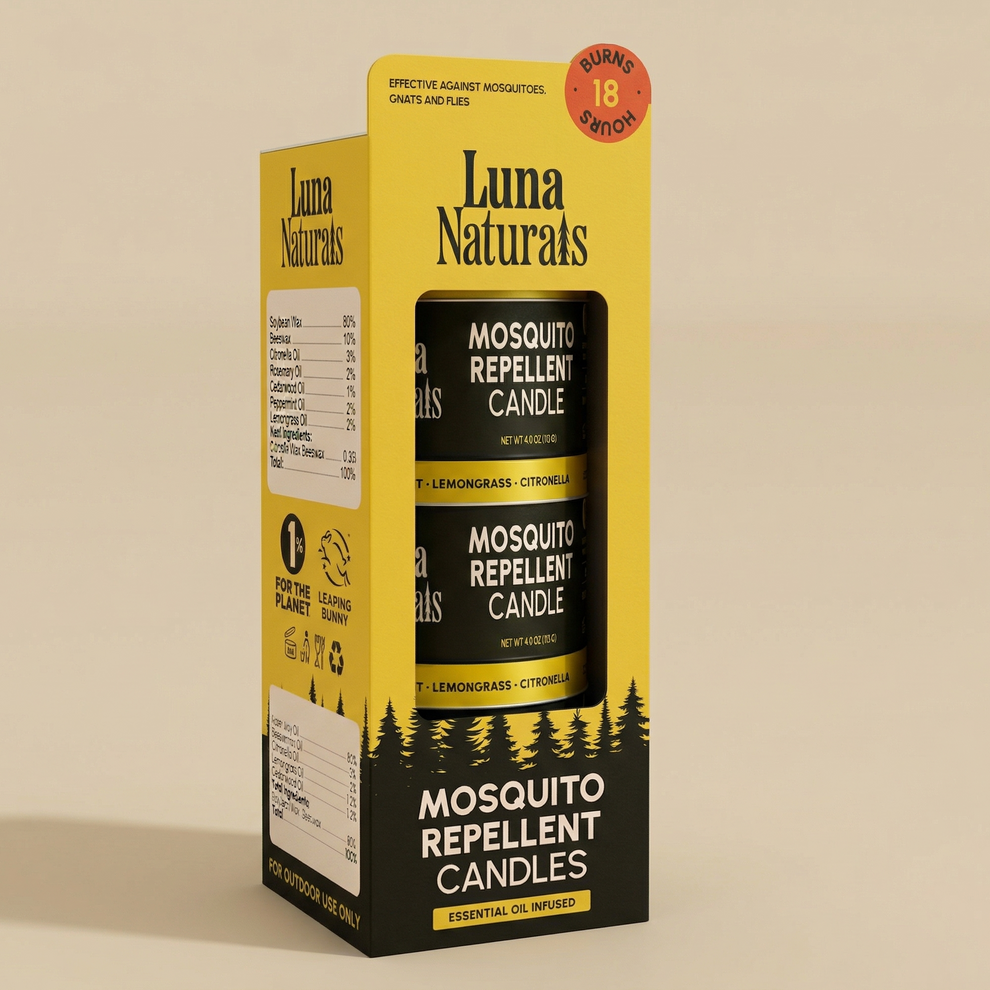
Luna Naturals
Luna Naturals Mosquito Repellent Incense (24 Sticks)
Coil · Not EPA-registered; all five actives are on EPA's 25(b) minimum-risk list and the panel names each with a percentage, which is what the exemption requires
Retailer links may earn us a commission. Scores are never affected.
Pros
- Active ingredient concentration disclosed
Cons
- Protects only the treated zone, and anything that disperses the vapor undermines it: wind outdoors, a draft or open door indoors
- You have to sit in the smoke, which carries fine particulates (PM2.5) and combustion byproducts
- Smoke carrying Peppermint oil, Citronella oil, Lemongrass oil, and Cedarwood oil, which are toxic to cats, so keep them away and never run it in an enclosed space
The full review
Incense sticks carrying a five oil blend, rosemary forward with peppermint, citronella, lemongrass and cedarwood behind it, burning on a sawdust base that makes up most of the stick. As area products go this is an honest construction and the panel is fully disclosed, percentages and all, which is more than most botanical emanators offer. Burning a botanical does put repellent compounds into the air near you, and directly downwind of a stick in still air you will notice fewer mosquitoes. The limits are the ones every smouldering emanator runs into: the effect is close range, it collapses in any breeze, and you are breathing combustion smoke to get it. What makes this listing worth singling out is the coverage claim. The brand's own website ships copy with an instruction to the copywriter left in the published text, telling them to use the twelve foot radius figure only if they hold test data. That note is still live on the product page. A retailer selling the same sticks makes the twelve foot claim outright. No test data is cited anywhere. The instruction survived into production and the claim it was guarding got made regardless.
Scorecard
Expand any pillar to see exactly why it scored what it did.
Effectiveness45%8No published landing or bite-reduction figure is on file for this device, over a small personal cloud rather than an area. Scored 60% on that reduction and 40% on how much space it protects, so a larger zone counts for real. Reduction figures come from controlled or semi-field trials, not backyard conditions. Real-world protection drops sharply in wind and open air, so this is scored with lower confidence.
No published landing or bite-reduction figure is on file for this device, over a small personal cloud rather than an area. Scored 60% on that reduction and 40% on how much space it protects, so a larger zone counts for real. Reduction figures come from controlled or semi-field trials, not backyard conditions. Real-world protection drops sharply in wind and open air, so this is scored with lower confidence.
Evidence & honest claims25%44Rosemary oil is well-supported by published evidence, weighted by how close its concentration is to the studied effective dose (base 56). Of 4 marketing claims audited: 1 strong, 0 moderate, 2 weak, 1 unsupported (-12).
Rosemary oil is well-supported by published evidence, weighted by how close its concentration is to the studied effective dose (base 56). Of 4 marketing claims audited: 1 strong, 0 moderate, 2 weak, 1 unsupported (-12).
Safety15%74This is an area device, not applied to skin, so dermal risk does not apply. Scored on no notable per-ingredient inhalation risk on file; burning it releases fine-particle smoke (PM2.5) and combustion byproducts you breathe (−14); moderate toxicity to fish and aquatic life (−12). Burn it outdoors in the open air only and stay out of the smoke stream, keep cats away. Keep it well away from ponds, aquariums, and water features.
This is an area device, not applied to skin, so dermal risk does not apply. Scored on no notable per-ingredient inhalation risk on file; burning it releases fine-particle smoke (PM2.5) and combustion byproducts you breathe (−14); moderate toxicity to fish and aquatic life (−12). Burn it outdoors in the open air only and stay out of the smoke stream, keep cats away. Keep it well away from ponds, aquariums, and water features.
Transparency15%65This product names its active ingredient (+30); discloses the strength of every active (+35); does not publish a coverage figure (0).
This product names its active ingredient (+30); discloses the strength of every active (+35); does not publish a coverage figure (0).
Every pillar is scored from published rules. Read how we score.
Coverage & effectiveness
This is an area device: it protects a zone around it rather than your skin. Effectiveness is the published reduction in mosquito landings or bites. Real-world protection is best in still air and drops in wind or open space.
Mosquitoes
None- Protected zone
- Personal zone
No reduction figure is assigned. The marketed twelve foot radius is not carried through, and the reason is unusually well documented: the brand's own published product copy still contains the instruction to its copywriter to use that figure only if it holds test data, and no such data is cited anywhere. A retailer makes the twelve foot claim outright regardless. Field testing of botanical smoke emanators generally finds a real but close range effect that a light breeze erases, so a figure describing a twelve foot protected zone would need evidence this product has not shown.
Ingredient disclosure
This product names its active ingredient (+30); discloses the strength of every active (+35); does not publish a coverage figure (0).
Only active ingredients are disclosed. The full ingredient list (inerts/carriers) is not published, so this may not be the complete formula.
- Cedarwood oilActive
Active repellent · 1%
- Citronella oilActive
Active repellent · 1.5%
- Rosemary oilActive
Active repellent · 4.5%
- Lemongrass oilActive
Active repellent · 1%
- Peppermint oilActive
Active repellent · 2%
Claims audit
What the marketing says, versus what the evidence supports.
“Each stick covers up to a 12 ft radius, providing a wide shield for your gathering”
EfficacyUnsupportedThis is the rare case where the seller documents the problem itself. The brand's live product page still carries the bracketed instruction to its own copywriter to use the twelve foot radius figure only if it holds test data. No test data is cited on the brand's site or any retailer's, and a retailer makes the claim outright anyway. A twelve foot radius is roughly 450 square feet of open moving air, which no smouldering botanical stick saturates, and shield implies protection for people inside that zone rather than a scent reaching it.
“A high-concentration blend of six essential oils creates an aromatic barrier”
EfficacyWeakThe panel lists five actives totalling ten percent against ninety percent sawdust, so high-concentration flatters it and the count is off by one. The underlying mechanism is real: burning these oils does release repellent compounds and there is a genuine close range effect in still air. Aromatic barrier overstates that into something with an edge and an inside, which smoke in open air does not have.
“Unlike traditional coils that rely on harsh chemicals, this provides a clean barrier”
NaturalWeakTrue that there is no pyrethroid here, which is a real difference from a conventional coil and removes the cat-specific hazard those carry. Clean is the wrong word for the rest of it: the delivery mechanism is combustion either way, and the fine particulates and combustion byproducts you breathe from a smouldering botanical stick are not meaningfully cleaner than from any other smouldering stick.
“Leaping Bunny and Plastic Bank certified”
OtherStrongBoth are real third-party programmes that can be checked with the issuing organisations. They speak to animal testing policy and plastic recovery respectively, and neither has any bearing on whether the product reduces bites.
Safe around dogs & cats?
Worst case from this product’s active ingredients. Do not apply this or any human repellent to your pet.
Mainly from Cedarwood oil, Citronella oil, Lemongrass oil, and others.
Mainly from Cedarwood oil, Rosemary oil, Lemongrass oil, and others.
Not veterinary advice. Full guide to repellents around pets →