Head to head
DEET vs picaridin: which should you actually use?
Two synthetics dominate effective repellents. One is the 60-year benchmark; the other quietly beats it on duration and feel. Here's the head-to-head.
We make Notch, so we're not a neutral third party. Rankings come from our published methodology, applied by code to every product the same way.
The bottom line
For most people, 20% picaridin is the better default: longer protection, better tick coverage, no odor, no plastic damage. Reach for DEET when it's what's on the shelf, when you want the single most-studied option, or in extreme conditions where 98% DEET's raw duration helps.
The tale of the tape
Head-to-head scorecard
DEET 25%
2 wins
Picaridin 20%
5 wins
Picaridin lasts longer at a lower concentration. Only 98% DEET pulls level.
The gap widens in tick country, where picaridin roughly doubles DEET's window.
How long each one lasts
Complete mosquito protection, by active ingredient
Hours until the first bite gets through, at typical consumer concentrations. Dark = lower bound, light = upper bound.
Modeled from complete-protection-time studies in our research library. Botanical bands reflect 10% lab-tested concentrations. Most consumer botanical products use less and protect for less time.
Does a higher percentage mean more protection?
Complete mosquito protection at each tested concentration. Dark = lower bound, light = upper bound.
DEET
Picaridin
DEET's curve flattens hard above ~30%: jumping from 25% to 98% buys barely two more hours, because concentration extends duration, not strength. Picaridin reaches longer protection at a far lower dose: 20% picaridin out-lasts every consumer DEET grade short of the 98% jungle juice. Same 12 h scale used across the site; modeled from dose-response data in our research library.
Picaridin 20%
Longest-lasting consumer option; odorless and gentle on gear.
DEET 25%
The 60-year benchmark. Higher concentrations extend duration, not strength.
Which should you pick?
Choose Picaridin if…
- You want the longest hands-off protection from one application
- You're in tick country (Lyme, anaplasmosis, or alpha-gal range)
- You can't stand repellent odor or greasy skin
- You'll wear it near sunglasses, phones, rain gear, or fishing line
- It's going on kids (over 2 months) or the whole family
Choose DEET if…
- It's simply what's on the shelf when you need cover now
- You want the single most-studied repellent on earth
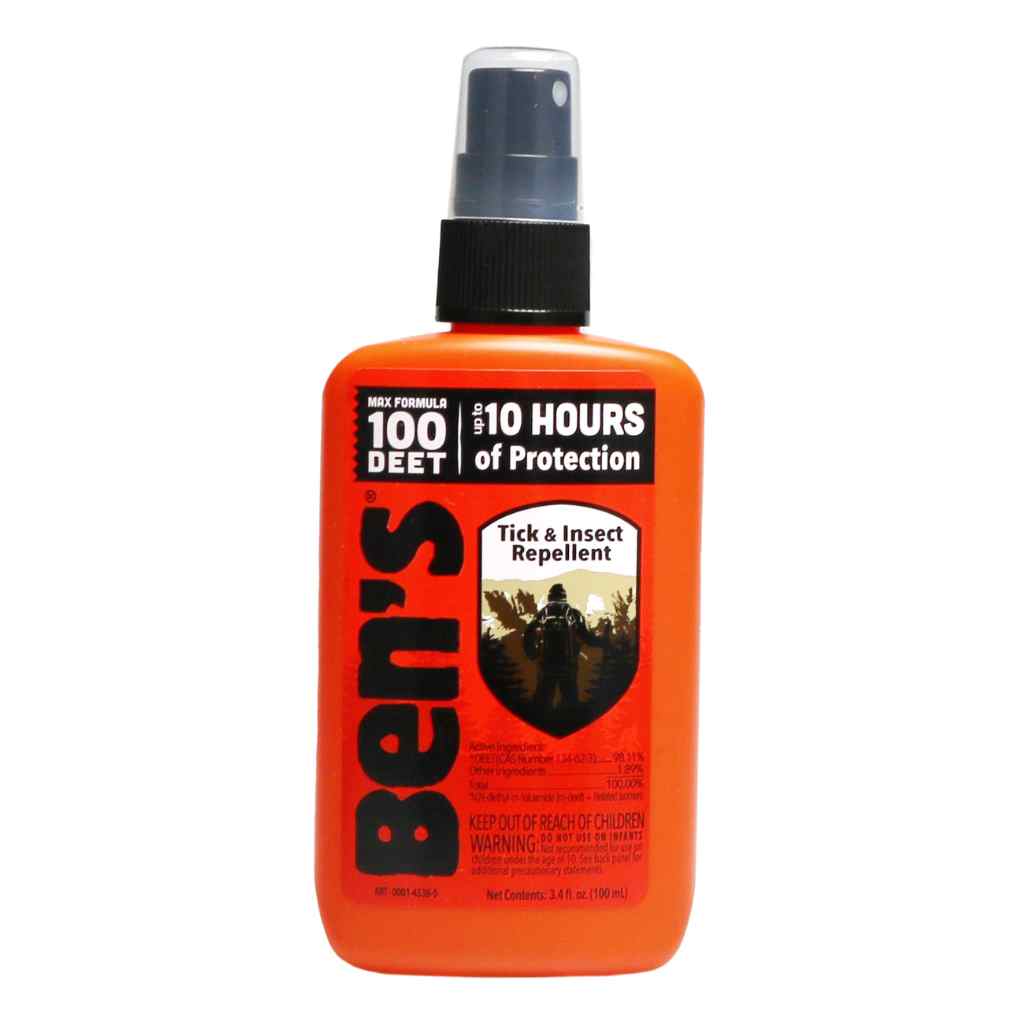
- You're facing extreme biting pressure where 98% DEET's raw duration earns its keep
- You already trust it and have no reason to switch
Top-scored products to consider

Frequently asked questions
Is picaridin or DEET better for ticks?
Picaridin at 20% holds 7–8 hours against ticks; DEET's tick protection is shorter and more variable. For tick country, picaridin (or permethrin-treated clothing) is the stronger choice.
Does picaridin last as long as DEET?
Longer, at consumer concentrations: 20% picaridin runs 8–10 hours against mosquitoes versus 5–6 hours for 25% DEET. Only very high-percentage DEET (98%) approaches it.
Is one safer than the other?
Both have strong safety records when used as directed and are recommended by the CDC. Picaridin is gentler on skin and gear, but neither presents a meaningful safety reason to choose the other.
Go deeper: read the full picaridin and deet ingredient pages, or see how we score.