Buyer's guide
The best bug repellents for sensitive skin
If your skin reacts easily, the goal is the gentlest thing that still works, not the weakest. Here are the repellents dermatologists reach for first, why "natural" doesn't mean "gentle," and how to read a label when your skin is the deciding factor.
We make Notch, so we're not a neutral third party. Rankings come from our published methodology, applied by code to every product the same way.
The bottom line
For reactive skin, two synthetics are the gentlest effective picks: 20% picaridin, which is odorless, dry, and non-stinging with all-day protection, and IR3535, one of the lowest-irritation actives you can buy (just keep it out of your eyes). Remember that "natural" isn't "gentle": on the irritation axis these synthetics actually beat the botanicals. Whatever you try, choose a fragrance-free formula and patch test it a day ahead.
The two we recommend for sensitive skin
Picaridin 20%
The gentlest all-day option. Picaridin is odorless and dry on the skin, doesn't sting eyes or broken skin, and is the active the Environmental Working Group singles out for sensitive skin and allergies. It also protects longer than any consumer DEET short of jungle-juice strength.
- Mosquitoes
- 8–10 h
- Ticks
- 7–8 h
EPA status: EPA-registered active
IR3535 20%
Europe's quiet workhorse for over 30 years, and one of the lowest-irritation actives you can buy. A common choice in family and sensitive-skin lines, and fragrance-free formulas are easy to find. Its one caveat is that it can sting the eyes, so keep it off the face.
- Mosquitoes
- 4–8 h
- Ticks
- 3–5 h
EPA status: EPA-registered active
Both are EPA-registered synthetics with excellent tolerance on reactive skin, so choose on feel and availability. Prefer a plant-based option? See the FAQ: for sensitive skin specifically, the botanicals are a step down on gentleness, not up.
How long each one lasts
Complete mosquito protection, by active ingredient
Hours until the first bite gets through, at typical consumer concentrations. Dark = lower bound, light = upper bound.
Modeled from complete-protection-time studies in our research library. Botanical bands reflect 10% lab-tested concentrations. Most consumer botanical products use less and protect for less time.
Picaridin 20%
Longest-lasting consumer option; odorless and gentle on gear.
IR3535 20%
European staple; species-variable (~9 h vs Aedes/Culex but ~4 h vs Anopheles) and needs a higher dose than DEET, hence the wide band.
Reading the label if your skin reacts easily
"Natural" and "chemical free" tell you nothing about irritation. These signals do. Scan the active-ingredient line and the fragrance first.
If the label has
Picaridin or IR3535 as the active
Gentlest effectiveThe two lowest-irritation actives with real staying power. Picaridin is the surest all-day pick; IR3535 is the mildest overall, just keep it away from your eyes.
If the label has
"Fragrance-free" or "unscented"
Fewer triggersAdded fragrance is a leading cause of repellent skin reactions. A fragrance-free formula removes one of the most common triggers before you even test it.
If the label has
A single named oil, like geraniol or lemon eucalyptus
Usually fine, patch testThe gentler botanicals are well tolerated by most people. Because reactions are individual, a 24-hour forearm patch test the day before settles it.
If the label has
Cinnamon, clove, or an unnamed "essential oil blend"
Higher irritation riskCinnamon (cinnamaldehyde) and clove (eugenol) are established contact allergens, and an unlisted blend hides what you're reacting to. These are the botanicals most likely to bother sensitive skin.
If the label has
Sunscreen and repellent in one bottle
Skip itThe CDC advises against combination products: sunscreen needs frequent reapplication, which over-applies the repellent and can increase how much your skin absorbs. Buy them separately.
Top-scored products to consider
See all →
Proven
Proven 14 Hour Mosquito + Tick Lotion – Odorless
Picaridin 20%
Complete protection

Ben's
Ben's Repellent Lotion
Picaridin 20%
Complete protection

Ben's
Ben's Tick Repellent Eco-Spray
Picaridin 20%
Complete protection
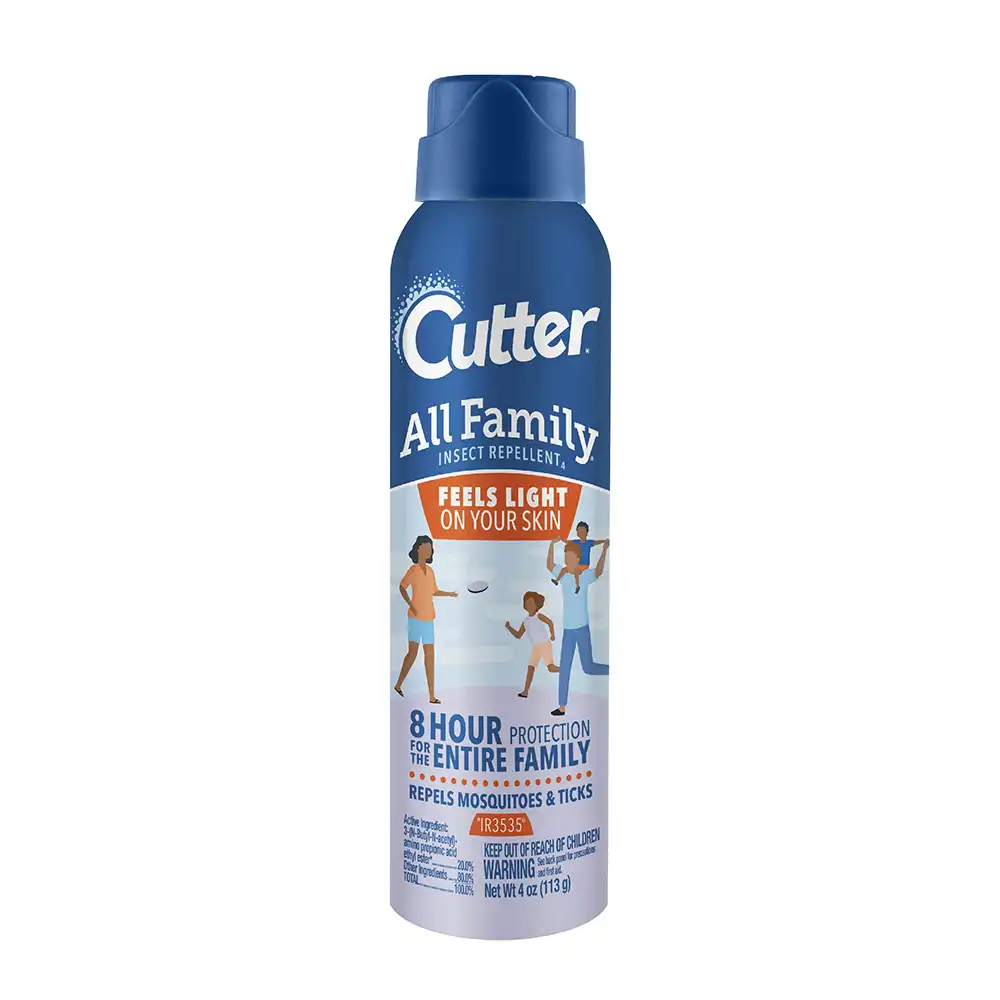
Cutter
Cutter All Family Insect Repellent
IR3535 20%
Complete protection
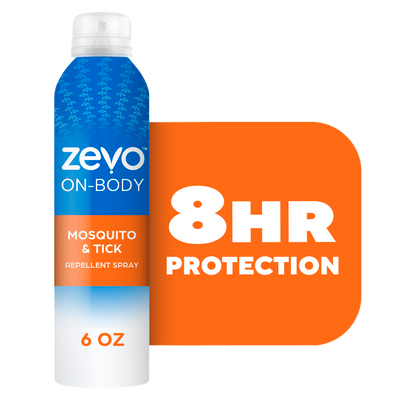
Zevo
Zevo On-Body Mosquito and Tick Repellent Aerosol Spray
IR3535 20%
Complete protection

Zevo
Zevo On-Body Mosquito and Tick Repellent Lotion
IR3535 20%
Complete protection
Frequently asked questions
What's the best mosquito repellent for sensitive skin?
Picaridin at 20%. It's odorless, dry rather than oily, doesn't sting eyes or broken skin, and is the active most often recommended for sensitive or allergy-prone skin, while still giving 8 to 10 hours of protection. IR3535 at 20% is a close second and the mildest overall, though it can irritate the eyes.
Is DEET bad for sensitive skin?
It isn't unsafe, it just feels harsher. DEET is oily, has a solvent smell, and can sting broken skin and eyes, and higher concentrations are more likely to irritate. If your skin reacts easily, picaridin or IR3535 give you the same protection with far fewer complaints. If you do use DEET, a lower concentration is milder than a high one.
Are natural or essential-oil repellents gentler?
Not automatically, which is the common misconception. Cinnamon and clove oils are established contact allergens, citronella and lemongrass are fragrant enough to bother reactive skin, and even the gentler botanicals carry some risk: oil of lemon eucalyptus is a recognized eye irritant (and off-limits under 3), and geraniol is a mild fragrance allergen. If you want a plant-based option, geraniol is the least harsh of them, but for sensitive skin the honest answer is that a synthetic like picaridin is the gentler choice. Patch test whatever you choose, because "natural" describes where an ingredient comes from, not how your skin will react.
How do I test a repellent if my skin reacts easily?
Patch test. Dab a small amount on the inside of your forearm the day before you need it, leave it for 24 hours, and watch for redness or itching. Choose a fragrance-free formula to remove one of the most common triggers, and avoid combination sunscreen-plus-repellent products.
Can I use repellent on eczema or broken skin?
Apply repellent to intact skin only, never over open or broken areas, and cover up with clothing where you can so there's less skin to treat. Picaridin is the most comfortable choice here because, unlike DEET, it doesn't sting.
What's gentlest for kids with sensitive skin?
Picaridin and IR3535 are both suitable from 2 months of age and are the gentlest effective options for children. Oil of lemon eucalyptus works but is not recommended under 3. As with adults, pick a fragrance-free formula and patch test a day ahead.
Go deeper: read the full picaridin and ir3535 ingredient pages, or see how we score.