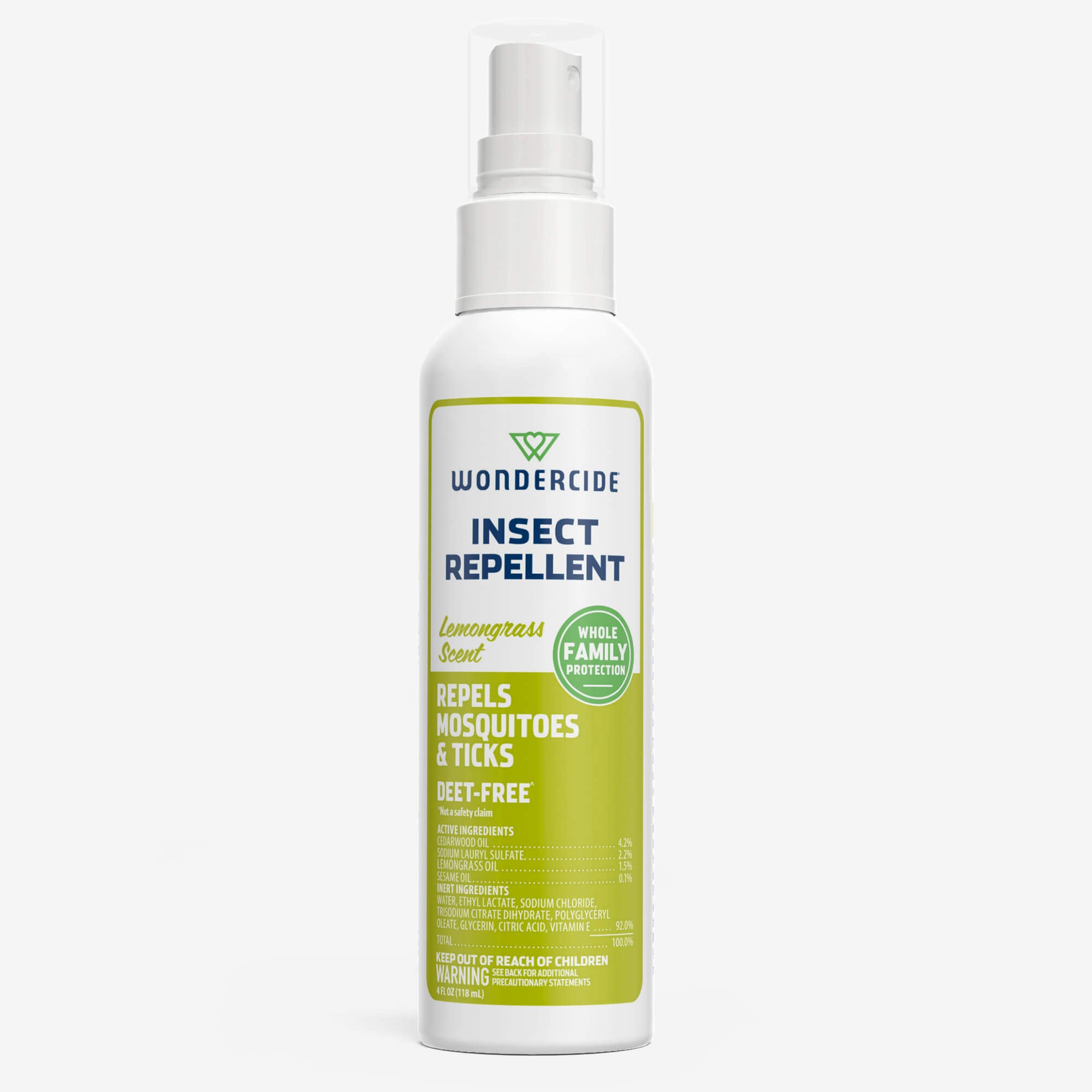
Wondercide
Wondercide Lemongrass Insect Repellent for Family
Spray · FIFRA 25(b) minimum-risk
Retailer links may earn us a commission. Scores are never affected.
Pros
- A cedar-and-lemongrass spray from a popular natural brand, with most of the formula disclosed.
Cons
- Barely works: no proven mosquito protection and only minutes against ticks.
- Lemongrass at 1.5% carries a high sensitization risk.
The full review
This plant-based spray leans on cedarwood and lemongrass oils, but as a repellent it largely comes up short, which lands it a not recommended. The effectiveness pillar all but bottoms out: the model finds no proven mosquito protection and only minutes against ticks. Of five audited claims only one is strong while three rate weak, holding the evidence pillar down, and transparency takes a hit because the formula is not fully disclosed. Safety is the other soft spot, driven mainly by lemongrass oil's high skin-sensitization risk at 1.5% plus a pregnancy caution. To its credit it uses EPA minimum-risk actives and is FIFRA 25(b) exempt, so nothing dangerous is hidden; it simply does not keep bugs off for long.
Scorecard
Expand any pillar to see exactly why it scored what it did.
Effectiveness45%8Mosquitoes: minimal or unproven protection. Ticks: minimal or unproven protection. Protection times are modeled from the actives, concentration, and format (see methodology). Scored on a saturating curve (each added hour counts less than the last), 65% mosquito / 35% tick, with reasonable confidence.
Mosquitoes: minimal or unproven protection. Ticks: minimal or unproven protection. Protection times are modeled from the actives, concentration, and format (see methodology). Scored on a saturating curve (each added hour counts less than the last), 65% mosquito / 35% tick, with reasonable confidence.
Evidence & honest claims25%49Cedarwood oil is well-supported by published evidence, weighted by how close its concentration is to the studied effective dose (base 56). Of 5 marketing claims audited: 1 strong, 1 moderate, 3 weak, 0 unsupported (-7).
Cedarwood oil is well-supported by published evidence, weighted by how close its concentration is to the studied effective dose (base 56). Of 5 marketing claims audited: 1 strong, 1 moderate, 3 weak, 0 unsupported (-7).
Safety15%66From published dermal toxicology (EPA/CIR/IFRA), scaled by each active's concentration against its leave-on limit: high skin-sensitization risk from Lemongrass oil at 1.5% (−18); moderate irritation risk from Lemongrass oil at 1.5% (−6); caution advised in pregnancy (−6); moderate aquatic toxicity (−4).
From published dermal toxicology (EPA/CIR/IFRA), scaled by each active's concentration against its leave-on limit: high skin-sensitization risk from Lemongrass oil at 1.5% (−18); moderate irritation risk from Lemongrass oil at 1.5% (−6); caution advised in pregnancy (−6); moderate aquatic toxicity (−4).
Transparency15%57This product publishes an ingredient list (+20); discloses 67% of active concentrations (+27); discloses 67% of all ingredient concentrations (+10); inert ingredients are not fully accounted for (0).
This product publishes an ingredient list (+20); discloses 67% of active concentrations (+27); discloses 67% of all ingredient concentrations (+10); inert ingredients are not fully accounted for (0).
Every pillar is scored from published rules. Read how we score.
How long it protects
Complete protection ends when the first bite gets through; partial protection keeps reducing bites as repellency decays. EPA label times are verified; the rest are modeled from the actives, concentration, and format.
Mosquito estimate basis (low confidence)
Botanical actives show little to no reliable mosquito protection; reapply very frequently if used at all. No measured CPT data for this active — estimated via generic sigmoid dose-response (×0.42 of a 10% literature anchor).
Tick estimate basis (low confidence)
Botanical actives show little to no reliable tick protection; reapply very frequently if used at all. On human-skin tick bioassays these oils protect for well under an hour and most show no significant protection versus an untreated control (Eisen 2024; Le Mauff 2024; Luker 2023).
Ingredient disclosure
This product publishes an ingredient list (+20); discloses 67% of active concentrations (+27); discloses 67% of all ingredient concentrations (+10); inert ingredients are not fully accounted for (0).
Only active ingredients are disclosed. The full ingredient list (inerts/carriers) is not published, so this may not be the complete formula.
Active ingredient concentrations are not published for this product.
- Cedarwood oilActive
Active repellent · 4.2%
- Lemongrass oilActive
Active repellent · 1.5%
- Sesame oilActive
Active repellent · concentration not disclosed
Claims audit
What the marketing says, versus what the evidence supports.
“Safe for use around dogs, cats, and people of all ages when used as directed”
SafetyWeakLemongrass oil at 1.5% — above its ~0.7% leave-on sensitization limit is a high skin-sensitization/irritation risk at this level, so a "gentle / safe-for-kids" claim overstates the safety profile.
“Lab tested and proven to work. Meets the same effectiveness standards required for conventional products.”
EfficacyWeakThe carrying active cedarwood oil (4.2%) has no dose-response data and lemongrass oil at 1.5% is trace (dose adequacy 0.15), with mosquito protection rated minimal/unproven.
“DEET-free essential oil formula”
Deet FreeStrongWell supported by published evidence
“Reapply every hour or as needed”
DurationModeratePer label directions; implies roughly 1 hour of protection per application.
“Safe for the whole family when used as directed”
SafetyWeakLemongrass oil at 1.5% — above its ~0.7% leave-on sensitization limit is a high skin-sensitization/irritation risk at this level, so a "gentle / safe-for-kids" claim overstates the safety profile.
Safe around dogs & cats?
Worst case from this product’s active ingredients. Do not apply this or any human repellent to your pet.
Mainly from Cedarwood oil, Lemongrass oil.
Mainly from Cedarwood oil, Lemongrass oil.
Not veterinary advice. Full guide to repellents around pets →