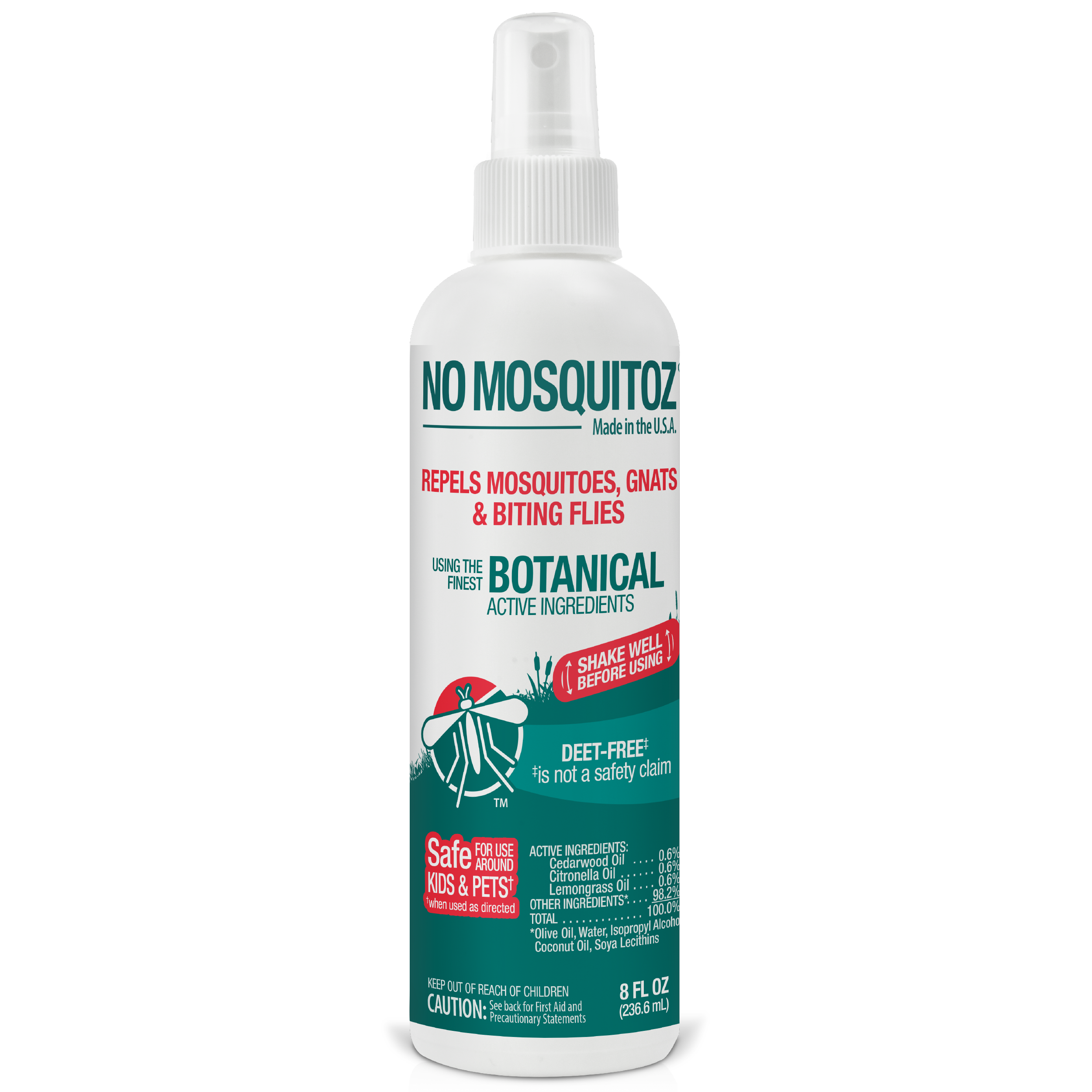
No Mosquitoz
No Mosquitoz Botanical Insect Repellent Spray
Spray · FIFRA 25(b) minimum-risk
Retailer links may earn us a commission. Scores are never affected.
Pros
- An oil-based botanical with coconut and olive oils for a softer skin feel.
Cons
- No concentrations disclosed, so strength can't be verified, and there's no proven protection.
- Lemongrass carries a sensitization risk.
The full review
This DEET-free botanical spray is not recommended, flagged on two counts: an incompletely disclosed formula and no proven mosquito protection. With the cedarwood, citronella, and lemongrass concentrations withheld, our model cannot estimate a protection window at all, so effectiveness sits near the floor. The evidence audit is roughly neutral on a modest set of claims. The heavier drag is safety, where lemongrass oil's high sensitization risk dominates alongside cedarwood irritation and a pregnancy caution. A full ingredient list and accounted-for inerts lift transparency off the floor, but with zero concentrations published the pillar cannot climb. The coconut-and-olive-oil base is pleasant, yet there is nothing here to verify.
Scorecard
Expand any pillar to see exactly why it scored what it did.
Effectiveness45%10Mosquitoes: protection cannot be modeled because the active concentration is undisclosed. Ticks: protection cannot be modeled because the active concentration is undisclosed. Protection times are modeled from the actives, concentration, and format (see methodology). Scored on a saturating curve (each added hour counts less than the last), 65% mosquito / 35% tick, with lower confidence.
Mosquitoes: protection cannot be modeled because the active concentration is undisclosed. Ticks: protection cannot be modeled because the active concentration is undisclosed. Protection times are modeled from the actives, concentration, and format (see methodology). Scored on a saturating curve (each added hour counts less than the last), 65% mosquito / 35% tick, with lower confidence.
Evidence & honest claims25%44Cedarwood oil is well-supported by published evidence, weighted by how close its concentration is to the studied effective dose (base 43). Of 5 marketing claims audited: 2 strong, 1 moderate, 2 weak, 0 unsupported (+1).
Cedarwood oil is well-supported by published evidence, weighted by how close its concentration is to the studied effective dose (base 43). Of 5 marketing claims audited: 2 strong, 1 moderate, 2 weak, 0 unsupported (+1).
Safety15%66From published dermal toxicology (EPA/CIR/IFRA), scaled by each active's concentration against its leave-on limit: high skin-sensitization risk from Lemongrass oil (−18); moderate irritation risk from Cedarwood oil (−6); caution advised in pregnancy (−6); moderate aquatic toxicity (−4).
From published dermal toxicology (EPA/CIR/IFRA), scaled by each active's concentration against its leave-on limit: high skin-sensitization risk from Lemongrass oil (−18); moderate irritation risk from Cedarwood oil (−6); caution advised in pregnancy (−6); moderate aquatic toxicity (−4).
Transparency15%45This product publishes an ingredient list (+20); discloses 0% of active concentrations (+0); discloses 0% of all ingredient concentrations (+0); the full formula including inerts is accounted for (+25).
This product publishes an ingredient list (+20); discloses 0% of active concentrations (+0); discloses 0% of all ingredient concentrations (+0); the full formula including inerts is accounted for (+25).
Every pillar is scored from published rules. Read how we score.
How long it protects
Complete protection ends when the first bite gets through; partial protection keeps reducing bites as repellency decays. EPA label times are verified; the rest are modeled from the actives, concentration, and format.
Mosquito estimate basis (low confidence)
No protection time estimated — this product's label doesn't disclose the active ingredient's concentration, and protection depends on both the ingredient and its strength.
Tick estimate basis (low confidence)
No protection time estimated — this product's label doesn't disclose the active ingredient's concentration, and protection depends on both the ingredient and its strength.
Ingredient disclosure
This product publishes an ingredient list (+20); discloses 0% of active concentrations (+0); discloses 0% of all ingredient concentrations (+0); the full formula including inerts is accounted for (+25).
Active ingredient concentrations are not published for this product.
- Citronella oilActive
Active repellent · concentration not disclosed
- Lemongrass oilActive
Active repellent · concentration not disclosed
- Cedarwood oilActive
Active repellent · concentration not disclosed
- Extra virgin olive oil (organic)
Carrier · concentration not disclosed
- Soya lecithins
Dispersing agent · concentration not disclosed
- Coconut oil
Emollient · concentration not disclosed
- Isopropanol
Diluent · concentration not disclosed
- Water
Diluent · concentration not disclosed
Claims audit
What the marketing says, versus what the evidence supports.
“FIFRA 25(b) minimum risk product”
OtherStrongExplicitly stated in the manufacturer SDS Section 15; exempt from federal EPA registration.
“Repels mosquitoes, gnats, and biting flies”
EfficacyWeakEssential-oil repellents have limited, short-duration efficacy evidence; SDS shows total essential-oil content under 2% by weight and the brand publishes no protection-time data.
“Safe for use around kids and pets when used as directed”
Kid SafeWeakLemongrass oil (concentration undisclosed) is a high skin-sensitization/irritation risk at this level, so a "gentle / safe-for-kids" claim overstates the safety profile.
“Non-greasy, non-sticky formula”
OtherModerateCosmetic feel claim; formula is olive/coconut oil based.
“DEET-free botanical formula”
Deet FreeStrongActives are cedarwood, citronella, and lemongrass essential oils; no DEET in the disclosed formula.
Safe around dogs & cats?
Worst case from this product’s active ingredients. Do not apply this or any human repellent to your pet.
Mainly from Citronella oil, Lemongrass oil, Cedarwood oil.
Mainly from Lemongrass oil, Cedarwood oil.
Not veterinary advice. Full guide to repellents around pets →